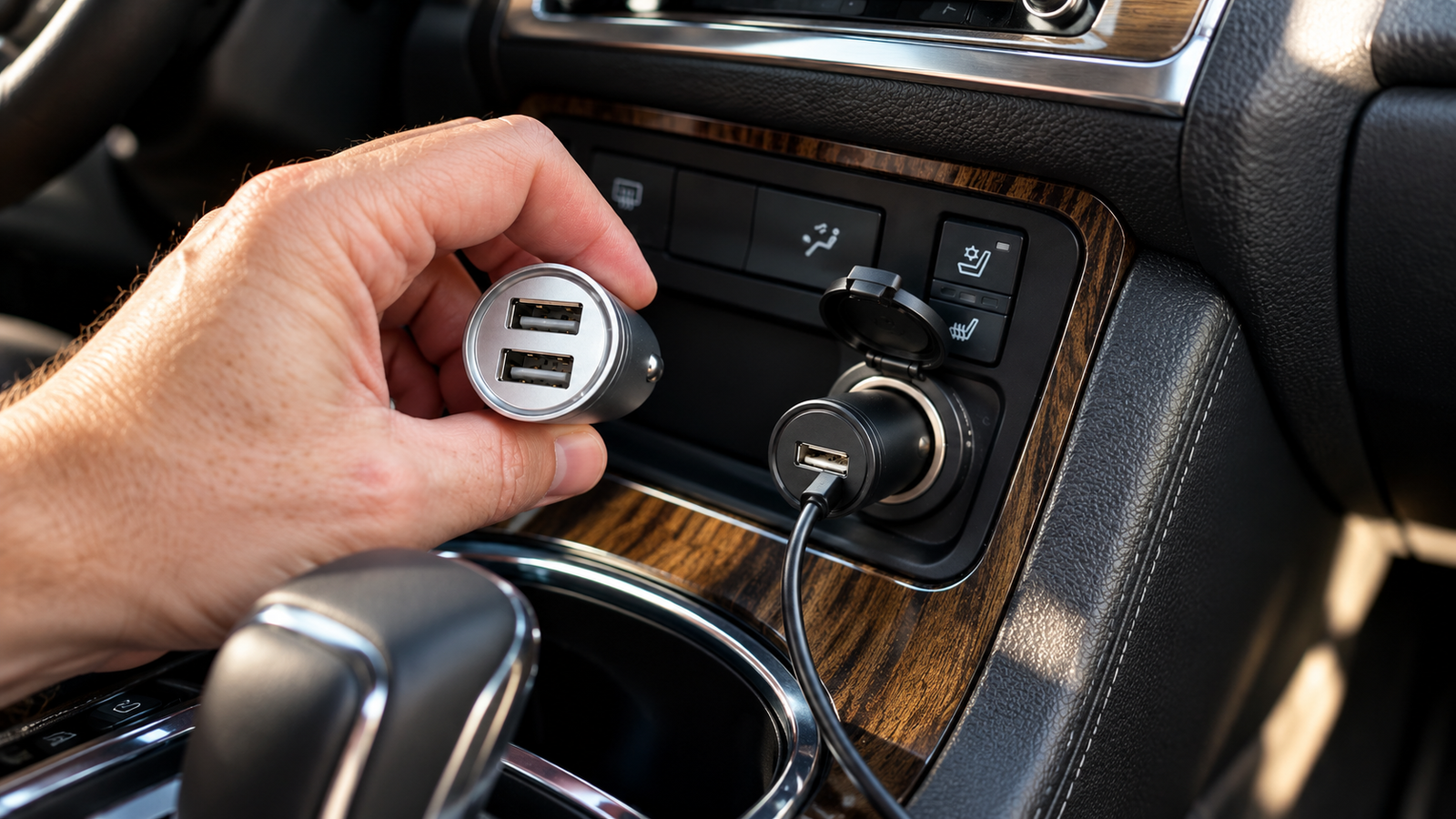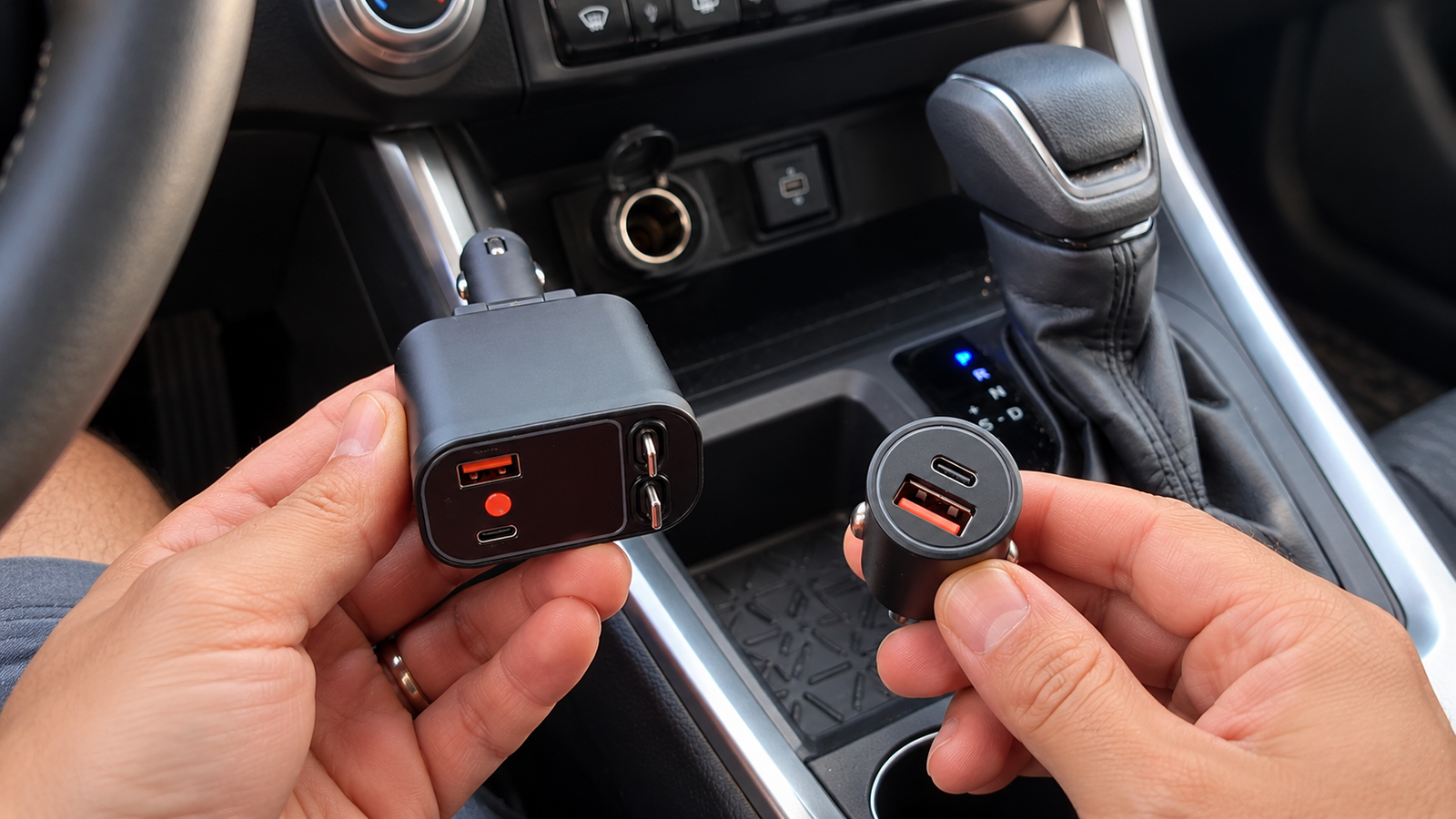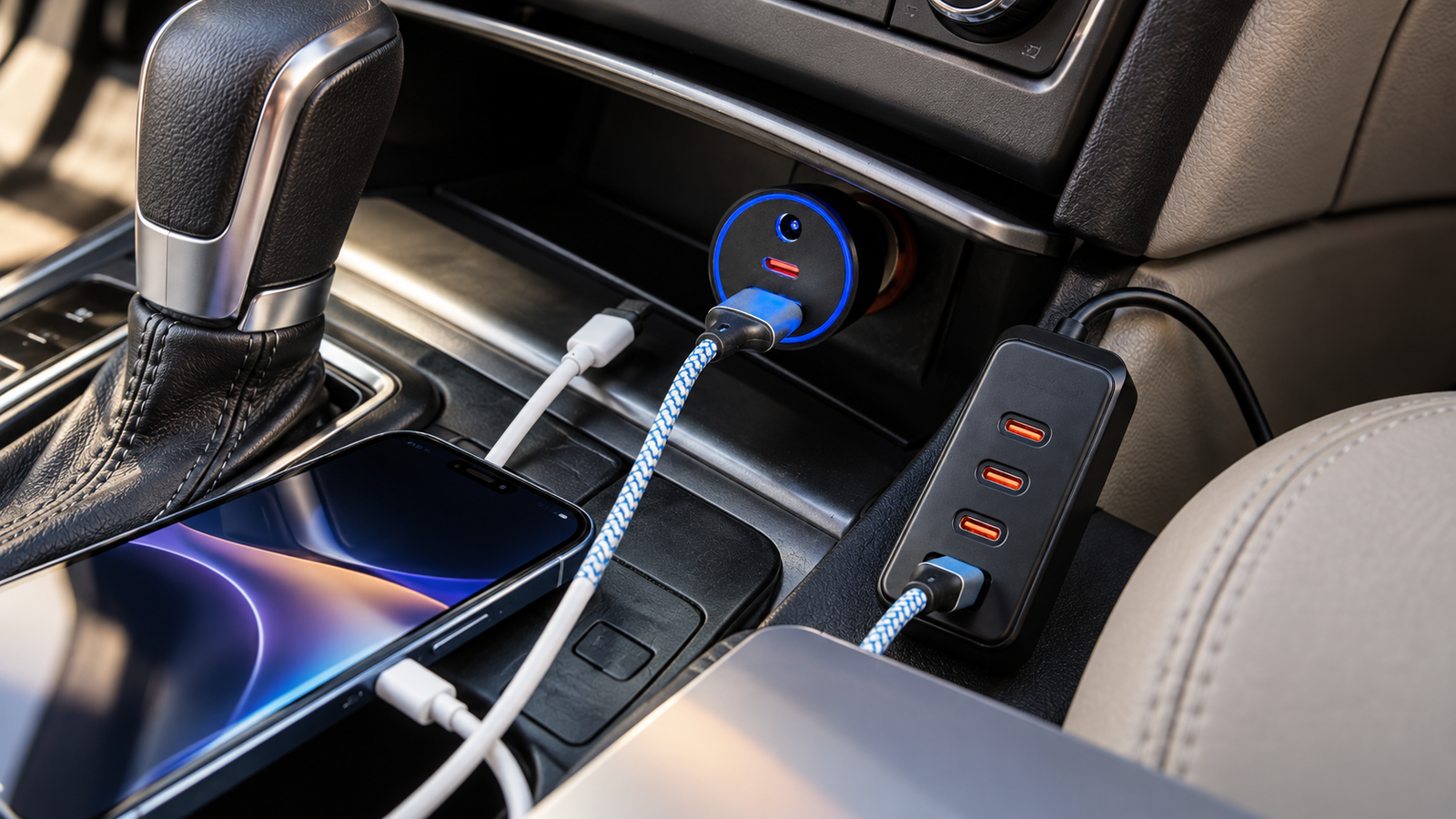
A cigarette lighter socket delivers 12V DC. Your phone needs 5V at 3A for standard charging, or a negotiated 9V to 20V sequence for USB-C Power Delivery fast charging. The socket was designed for a lighter, not a 65W laptop charger. That mismatch is why upgrading it makes sense.
Three paths exist. A plug-in USB adapter drops into the existing socket in under a minute. A flush-mount USB panel replaces the lighter bezel and gives a factory-look result. A hardwired USB module behind the dash eliminates the socket entirely and runs on ignition-switched power. This 2026 guide covers all three routes, with wiring specs, parts checklists, and a sourcing note for workshops and resellers handling volume installs.
The short answer: A flush-mount USB module wired to an ignition-switched 12V circuit gives the cleanest result. A certified plug-in adapter is the zero-tool option that works on any car, any day.
Quick Answer: 3 Ways to Replace Your Cigarette Lighter with USB
| Route | Cost | Skill Level | Time | Appearance | Reversible? |
|---|---|---|---|---|---|
| Plug-in USB adapter | $8–35 | None | 30 seconds | Protrudes from dash | Yes |
| Flush-mount panel | $15–60 | Moderate | 30–45 min | Factory-integrated | Yes |
| Hardwired behind dash | $20–80 | Advanced | 1–2 hrs | Completely hidden | No |
The plug-in route leaves the original socket intact. The flush-mount route replaces the trim ring and socket housing while keeping the same 12V feed. The hardwired route taps a fused ignition circuit and makes a permanent change to the vehicle.
Option 1: Plug-In Socket Adapter
This is the fastest path. A plug-in USB adapter sits inside the existing 12V cigarette lighter socket and converts it to one, two, or three USB ports. No tools. No wiring. Pull it out if you change vehicles.
The real variable is the adapter's charging controller. A cheap no-name unit typically outputs 5V at 1A per port regardless of what the box says. That slow-charges a modern smartphone and won't negotiate USB-C Power Delivery at all. A unit with a proper protocol IC runs the handshake that gets an iPhone 15 or Samsung Galaxy S24 to 20W or higher.
Check three things before buying any plug-in adapter:
- Does it list the per-port protocol, including USB-C PD wattage when loaded solo?
- Is the safety IC confirmed for overcurrent, overvoltage, and overtemperature protection?
- Does it carry CE, FCC, and RoHS certification, not just a logo printed on packaging?
A certified 40W dual-port unit with PD on the USB-C port handles a phone plus a tablet at full speed. SUNDA's 40W dual-port car charger runs 20W PD on the USB-C port and 20W on the USB-A port, with CE, FCC, and RoHS documentation behind it. That is a better starting point than a four-port unit from an unverifiable source that can't deliver more than 5W per port.
Option 2: Flush-Mount USB Panel
A flush-mount USB panel swaps the lighter bezel for a unit housing one or more USB ports. The result looks factory-installed. The same two wires from the original socket, red or yellow for positive and black or brown for ground, connect to the new module.
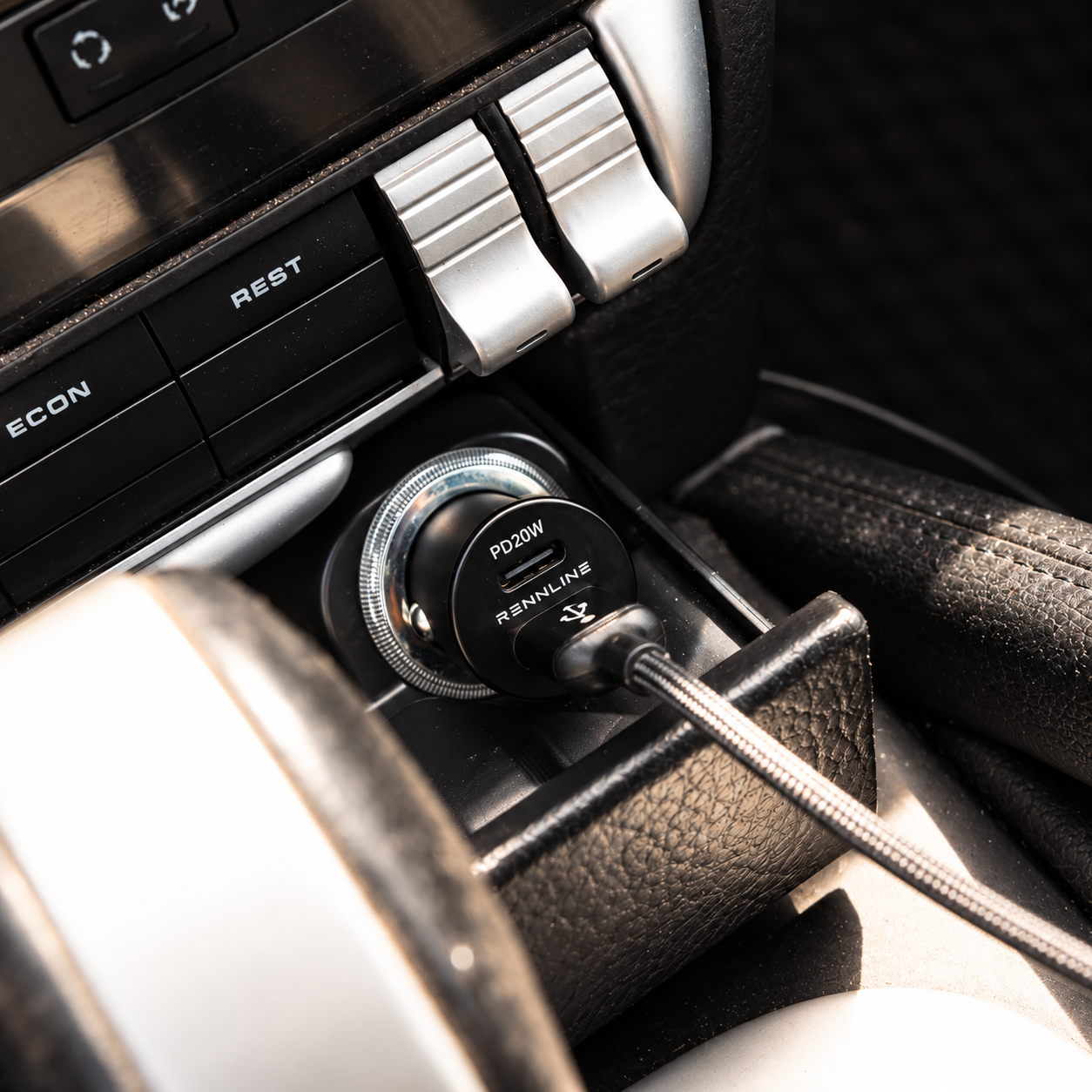
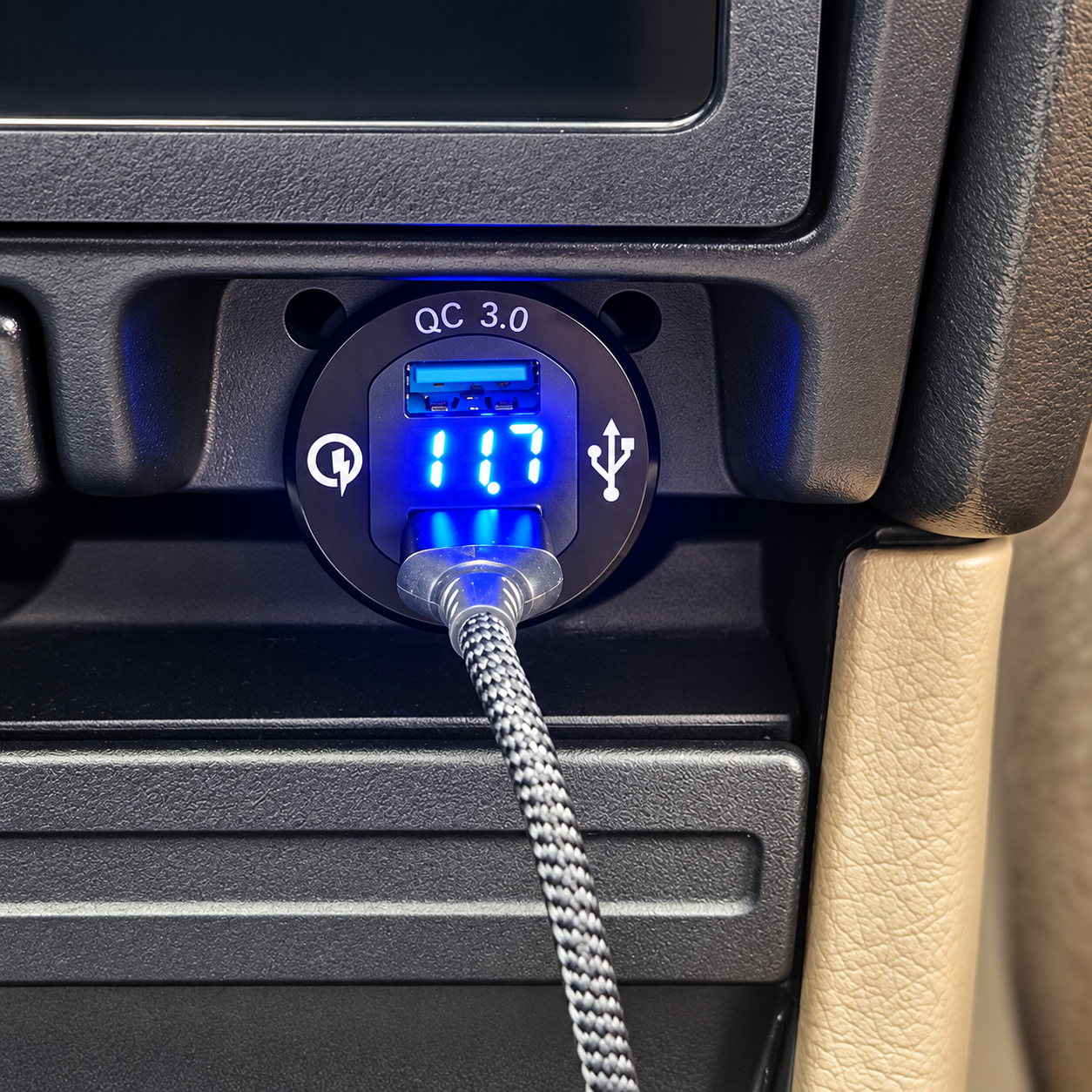
Most universal bezels fit a standard 21 mm opening. Some vehicles use a proprietary mount or a trim piece that integrates with the center console. Check your specific make and model before ordering any universal panel.
The 12V feed from the original circuit stays in place. That circuit is typically fused at 10A or 15A from the factory. A USB module drawing 3A to 5A total runs well within that limit. The 80% rule applies: on a 15A circuit, continuous draw should not exceed 12A. A 25W to 36W USB panel is the practical ceiling before you push the original wiring.
Two fitment options:
- Universal panels fit most 21 mm openings and offer the widest range of port configurations, including USB-C PD. Lower cost, but require measuring the opening before purchase.
- Model-specific trim matches the OEM dash profile exactly. Harder to source, usually more expensive, but a cleaner install on vehicles where universal bezels don't seat flush.
Option 3: Hardwired USB Module Behind the Dash
A hardwired USB module bypasses the lighter socket entirely. The module mounts behind the dash or inside the center console, with only the USB port face visible. Power comes from a fuse tap off the fuse box, wired to an ignition-switched circuit so it activates with the key.
This is the cleanest visual result. It is also the most involved installation. You pull dash panels, route wiring, and make permanent connections. For workshops and vehicle upfitters doing this across a fleet, the per-unit time drops quickly once the process is dialed in.
Safety rules that apply to every hardwired installation:
- Place the inline fuse within 30 cm of the power tap point, never further
- Use 16 AWG stranded copper wire for runs under 10 feet at currents up to 10A
- Solder and heat-shrink connections rather than using wire nuts, which loosen under vehicle vibration
- Always disconnect the battery negative terminal before touching any wiring
For a full wiring walkthrough with diagrams, see the dedicated hardwire guide coming to the SUNDA blog.
Tools, Parts, and Specs Checklist
Confirm you have everything below before starting a flush-mount or hardwired install.
Parts list
- USB replacement module (5V/3A minimum per port, USB-C PD 20W+ preferred)
- Inline blade fuse holder plus a 10A or 15A blade fuse matching the original circuit
- 16 AWG stranded copper wire, red and black
- Butt connectors or solder plus heat shrink tubing
- Trim removal tool set (plastic pry tools)
Tools
- Multimeter (set to DC volts, 20V range)
- Wire stripper and crimping tool
- Phillips and Torx screwdrivers
Minimum spec table
| Parameter | Minimum Acceptable | Recommended |
|---|---|---|
| Wire gauge | 20 AWG | 16 AWG stranded copper |
| Fuse rating | Match factory circuit (10A or 15A) | 10A for a dedicated module run |
| Connection method | Butt connectors | Solder plus heat shrink |
| Fuse placement | Within 30 cm of tap | Within 15 cm of tap |
| Max continuous draw | 80% of fuse capacity | Under 10A on a 15A circuit |
Wire and fuse specs from 12V automotive wiring references. Verify against your vehicle's owner manual before modifying any circuit.
Step-by-Step: Flush-Mount Installation
Step 1: Disconnect the battery. Pull the negative terminal. Wait five minutes for any capacitors in the vehicle's modules to discharge.
Step 2: Remove the trim. Use a plastic pry tool to release the panel around the lighter socket. Most trim pieces use friction clips. A metal screwdriver against finished trim leaves marks that are hard to reverse.
Step 3: Unplug the lighter harness. The connector pulls straight off the rear of the socket. Note which wire is red or yellow (positive) and which is black or brown (ground).
Step 4: Confirm polarity. Reconnect the battery, set the ignition to ACC, and touch the multimeter probes to each wire. The positive wire reads 12V to 14.4V. The ground wire reads 0V against the chassis. Disconnect the battery again before continuing.
Step 5: Prepare the USB module. Strip 6 mm of insulation from each module wire. Connect positive to positive and ground to ground using butt connectors. Solder if you want a vibration-resistant joint, then cover with heat shrink.
Step 6: Fit the module. Press the USB module into the 21 mm panel opening until the retaining clip seats.
Step 7: Reassemble the trim. Clip the trim panel back into position, working from center outward.
Step 8: Final test. Reconnect the battery, turn the ignition to ACC, plug in a phone, and verify the correct charging protocol negotiates. A USB-C PD phone should begin fast charging within 15 seconds. If it doesn't, check the ground connection first.
Sourcing Note for Resellers and Workshops
If you're running these installs across a vehicle fleet or building out a reseller catalog, the product selection matters as much as the installation technique.
A certified plug-in USB car charger from a vetted factory gives you a documented unit with a confirmed per-port output table and traceable certification. That separates a professional workshop install from a consumer DIY job using an unverified part. You can put your own brand on it, specify the port mix, and have an 18-month warranty behind it if a unit fails.
SUNDA's full car charger line covers 40W to 230W with CE, FCC, and RoHS documentation. The 120W four-port model is the top-certified option in the range: two USB-C PD ports at 60W each, two USB-A QC3.0 ports at 18W each, and a certification set that includes UL, ETL, SAA, and CCC alongside the core CE/FCC/RoHS stack. For fleet buyers or private-label programs, OEM and ODM paths are both available. For safety certification documentation by export market, the car charger safety standards guide covers what each standard governs and what documentation to request.
Ready to Source Certified USB Chargers for Your Fleet or Catalog?
SUNDA has manufactured car chargers and mobile charging accessories since 2009, operating from a 2,000 sqm factory in Baoan District, Shenzhen. The current car charger line carries CE, FCC, and RoHS on every model, with select units adding UL, ETL, SAA, ISO9001, and CCC.
Contact the SUNDA sourcing team with your target market, port configuration, and expected annual volume. That is enough to get a quote and a model recommendation. OEM branding and ODM custom configurations are both available through the same in-house team.
FAQ
Can I replace a cigarette lighter with a USB port myself?
Yes, for the plug-in adapter route. The flush-mount and hardwired installations need basic electrical skills: you should know how to use a multimeter, confirm polarity on a 12V circuit, and make a secure crimp or solder connection. If you're not comfortable identifying the positive wire, the plug-in adapter is the safe choice with no electrical risk.
How many amps can I safely run from a cigarette-lighter circuit?
Most passenger vehicles fuse the lighter socket at 10A or 15A from the factory. At 12V, a 15A circuit can carry up to 180W total, but the 80% safety rule limits continuous draw to around 144W (roughly 12A). A USB module drawing 3A to 5A total runs well within that limit. Never install a higher-rated fuse than the original to compensate for high draw.
Will a flush-mount USB port work when the ignition is off?
That depends on which circuit you tap. The standard lighter socket is typically ignition-switched, so power cuts when the key is off. A fuse tap wired to a constant-power circuit keeps the port live after the engine shuts down. A constant-power draw can drain the battery overnight if anything is left plugged in.
Do replacement USB ports support fast charging?
Only if the module includes the right controller IC. A port labeled USB-C without a listed PD wattage is almost certainly a 5V/2.4A port, not a fast charger. Confirm that the module lists USB-C PD at 18W or higher on the spec sheet before buying. QC3.0 on USB-A and PPS for Samsung Super Fast Charging require separate IC support.
How much does it cost to convert a cigarette lighter to USB?
A certified plug-in adapter runs $8 to $35. A flush-mount panel module costs $15 to $60. The hardwired route adds tools and materials, putting the total at $20 to $80 for a single install. Fleet and workshop volume brings the per-unit cost down significantly, especially with OEM sourcing.
Does removing the lighter socket hurt resale value?
Only if you cut wires or damage the trim. A clean flush-mount install using the original harness and an intact trim panel is reversible. Swap the original socket back in before selling and there's no visible change to the vehicle. A hardwired installation behind the dash is not reversible without rewiring.