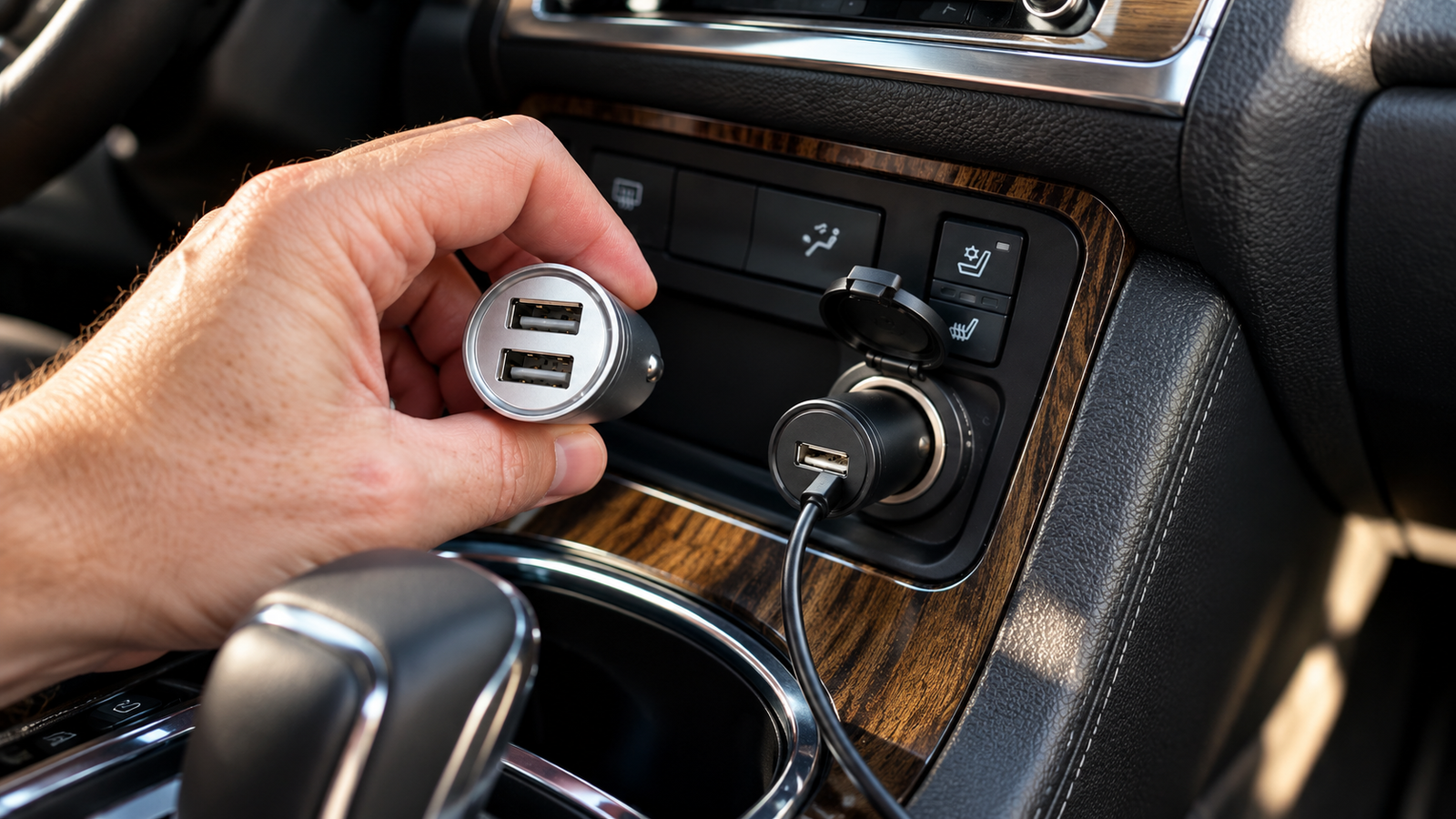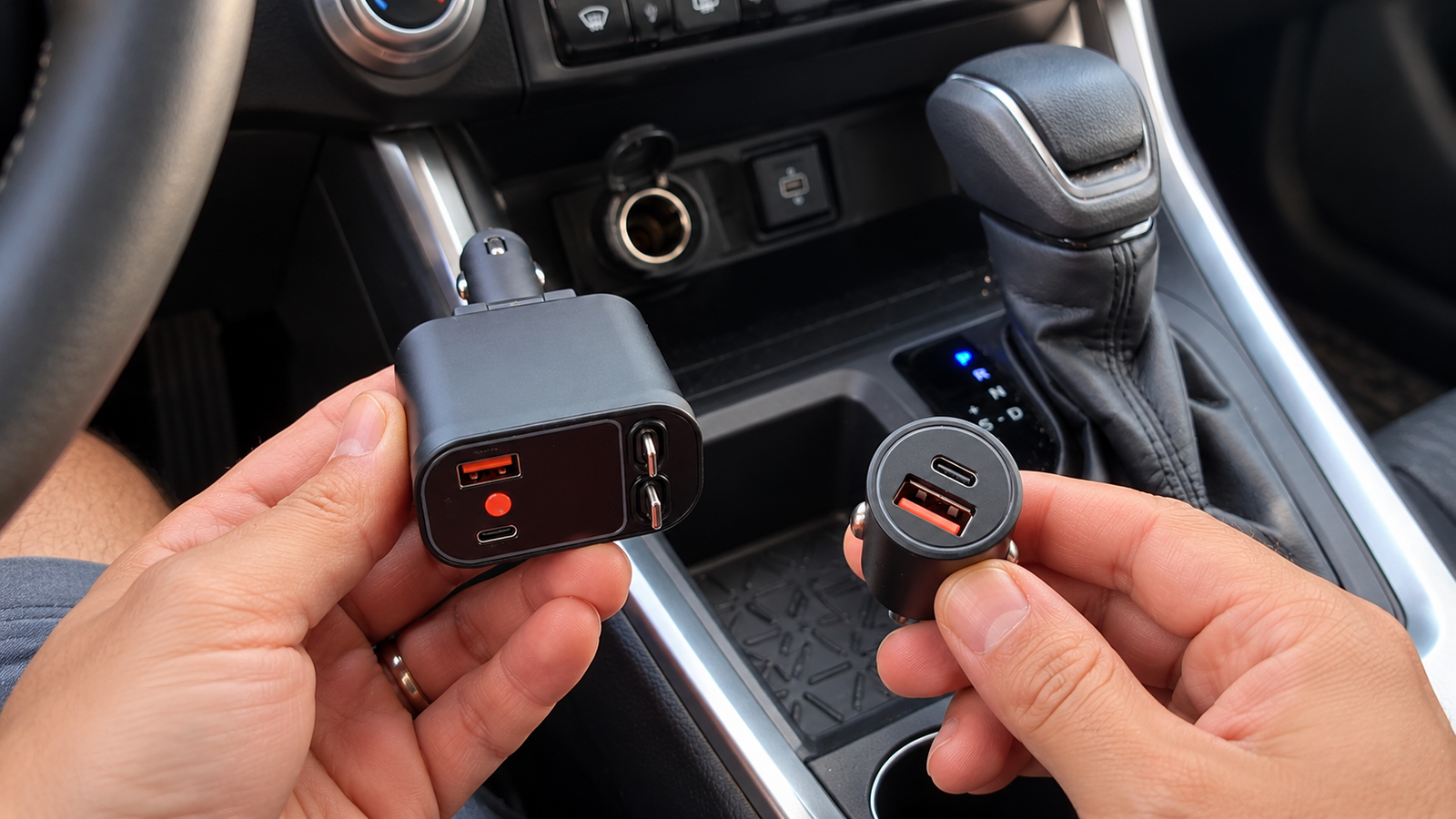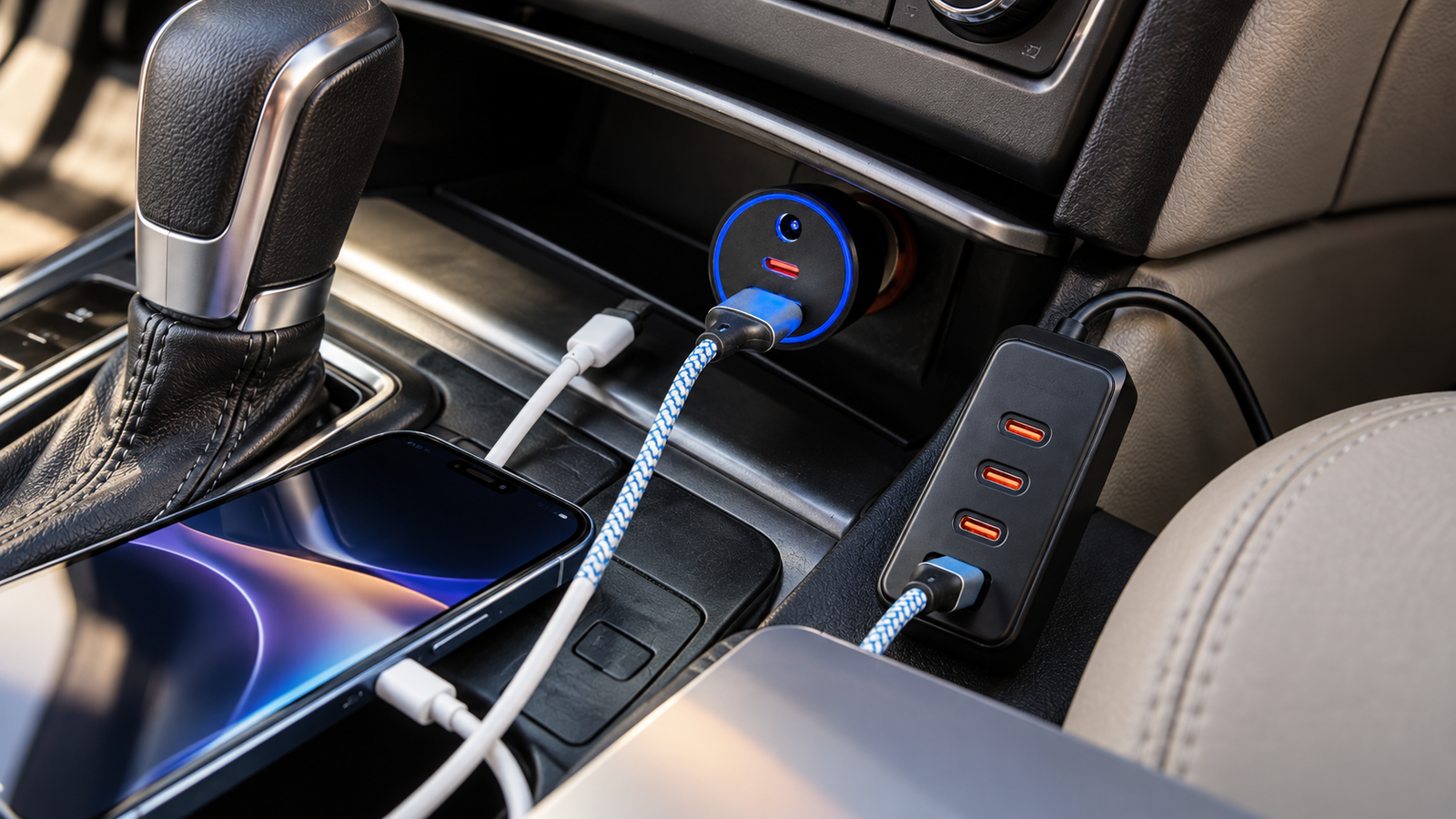
The best car charger in 2026 is one that matches your customers’ devices, supports the right fast-charging protocols, and arrives with verified certifications for your target import market. That decision carries far more weight than it did a few years ago, if you are sourcing for private-label resale, retail distribution, or fleet procurement.
USB-C Power Delivery is the standard now. QC3.0 still belongs in multi-port configurations for backward compatibility. PPS handles Samsung Super Fast Charging and other Android flagships that need variable voltage to hit peak speeds. Getting the right mix of all three, in a unit that clears CE, FCC, and RoHS, is what separates a profitable SKU from a return-rate problem.
This guide covers form factors, wattage tiers, protocol compatibility, certifications by export market, manufacturer selection, and SUNDA’s confirmed 2026 car charger line.
What to Look for in a 2026 Car Charger
Before you evaluate any model, confirm these five things are present:
- At least 30W USB-C PD for modern smartphones, including iPhone 15 and newer Android flagships
- 60W or higher per USB-C port for any USB-C laptop charged from the vehicle
- Dual USB-C ports in any fleet or resale SKU so two devices charge at full speed simultaneously
- PPS support if your end customers use Samsung Galaxy S-series or other Android flagships that rely on variable-voltage fast charging
- CE plus FCC plus RoHS as the minimum certification set for US and EU import, with E-mark added for automotive distribution channels in Europe
Wattage Tiers by Use Case
| Category | Recommended Wattage | Best Buyer Fit |
|---|---|---|
| Everyday smartphone | 30W USB-C PD | iPhone users, most Android phones |
| Phone plus tablet | 51W combined (PD30W/PPS33W+QC18W) | Dual-device commuters, daily drivers |
| Dual heavy-use devices | 90W | Road warriors, content creators |
| Laptop plus phone combo | 120W (Dual PD60W, 60W per USB-C port) | Rideshare drivers, traveling sales teams, fleet vehicles |
| MacBook 16" | 230W (PD140W/PPS63W+PD45W+QC45W) | PD 140W for MacBook Pro 16 (M5 Pro) |
What Is a Car Charger and How Does It Work?
A car charger plugs into the vehicle’s 12V or 24V cigarette-lighter socket and steps the DC voltage down through an internal buck converter chip. The socket runs anywhere from 12V at idle to roughly 13.5V to 14.4V with the engine running. The converter takes that range and outputs regulated USB power at the voltage the connected device actually requests.
Modern fast chargers go further. When you plug in an iPhone 15 or a Samsung Galaxy S24, the charger and device run a handshake over the USB-C connection. The phone requests its preferred voltage and current. The charger confirms it can supply that combination, and charging starts at the negotiated wattage.
A charger with no fast-charge controller chip defaults to 5V at 0.5A. That trickle-charges a phone rather than fast-charges it. Protocol support determines the ceiling. The headline wattage number on the box means nothing if the controller chip cannot negotiate it with the device.
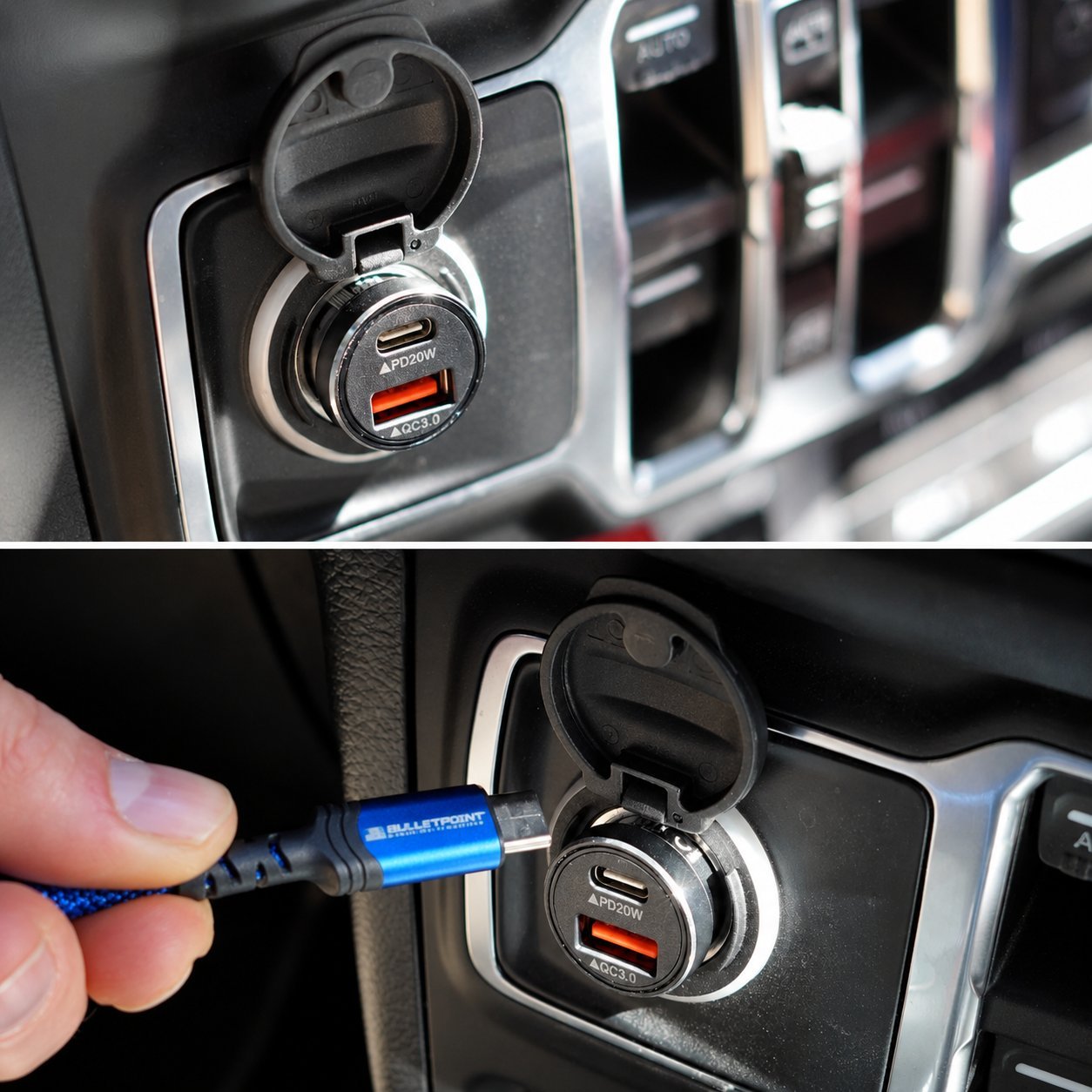
Car Charger Types and Form Factors
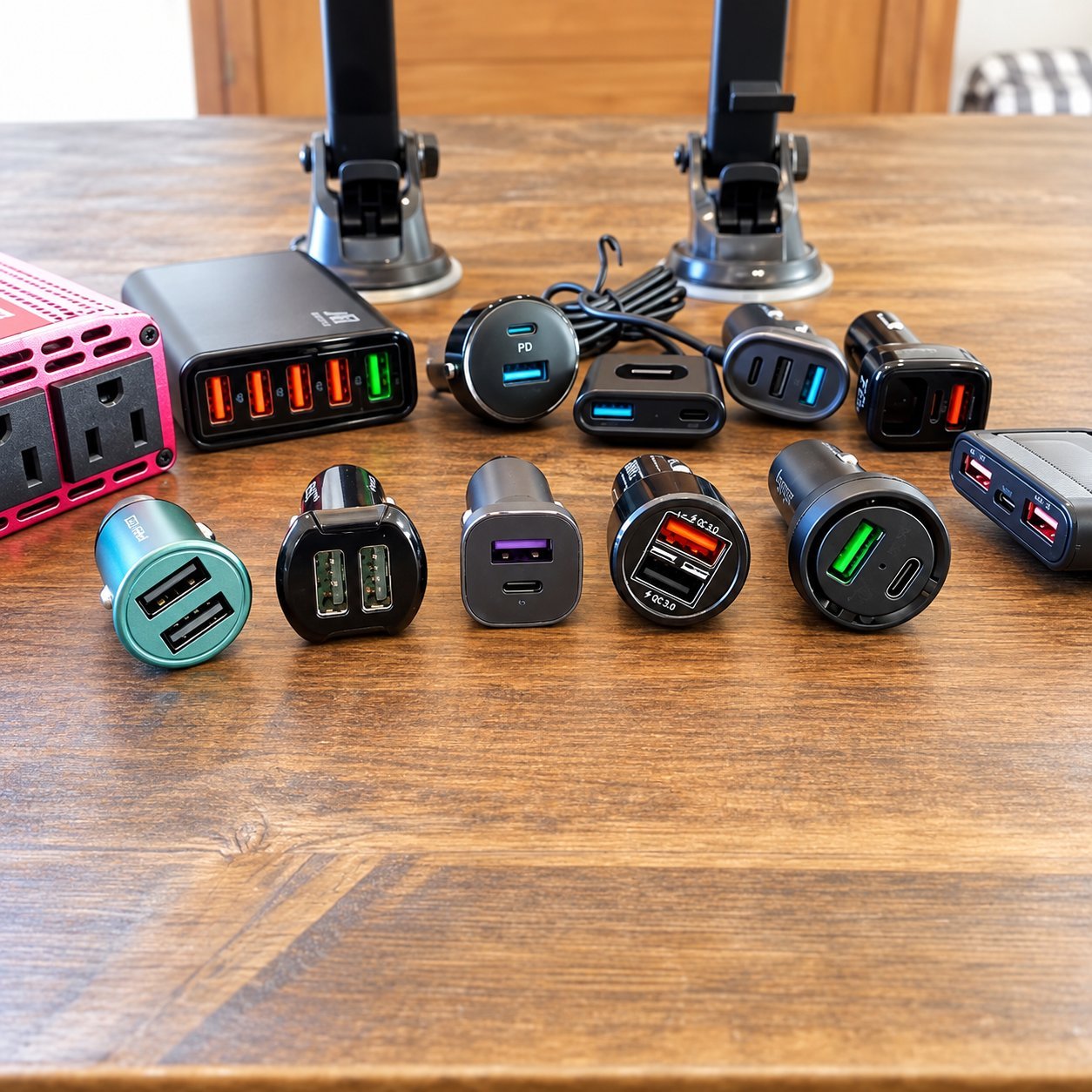
12V Cigarette-Lighter USB-A Chargers
The legacy form factor still sells in fleet procurement for vehicles running older devices. A compact plug with one or two USB-A ports draws from the 12V socket and tops out at 18W QC3.0 per port. Good as a budget add-on or secondary port. Not sufficient as the primary charging solution for any phone sold after 2022.
USB-C PD Chargers
Single or dual USB-C PD units are the current standard for any buyer targeting iPhone 15 or later, Android flagships, or USB-C tablets. A 30W single-port unit covers most smartphones. A 60W single-port unit begins to handle lightweight laptops. The key check when evaluating any USB-C charger: confirm the port delivers its stated wattage solo, and confirm what happens to that output when a second port is occupied.
Multi-Port Chargers
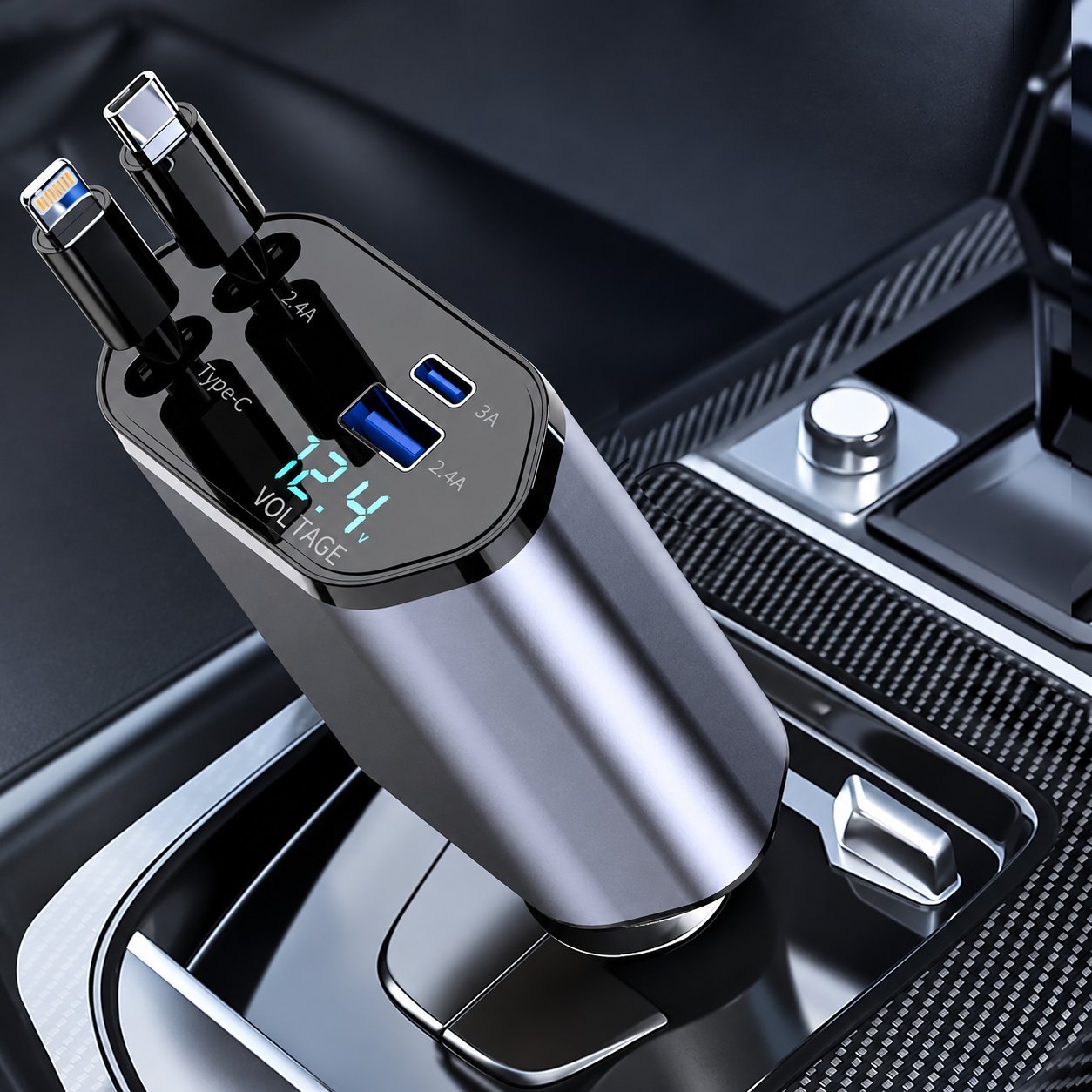
Two or four ports, mixing USB-C and USB-A, are the most versatile SKU for resale and fleet. A rideshare driver uses one port for their phone, one for a passenger. A road-trip family loads all four at once. The procurement rule: headline wattage is always the combined total. A 120W quad-port unit may supply only 60W to a single USB-C port when all four ports are loaded. Get the full per-port output table before you finalize a spec.
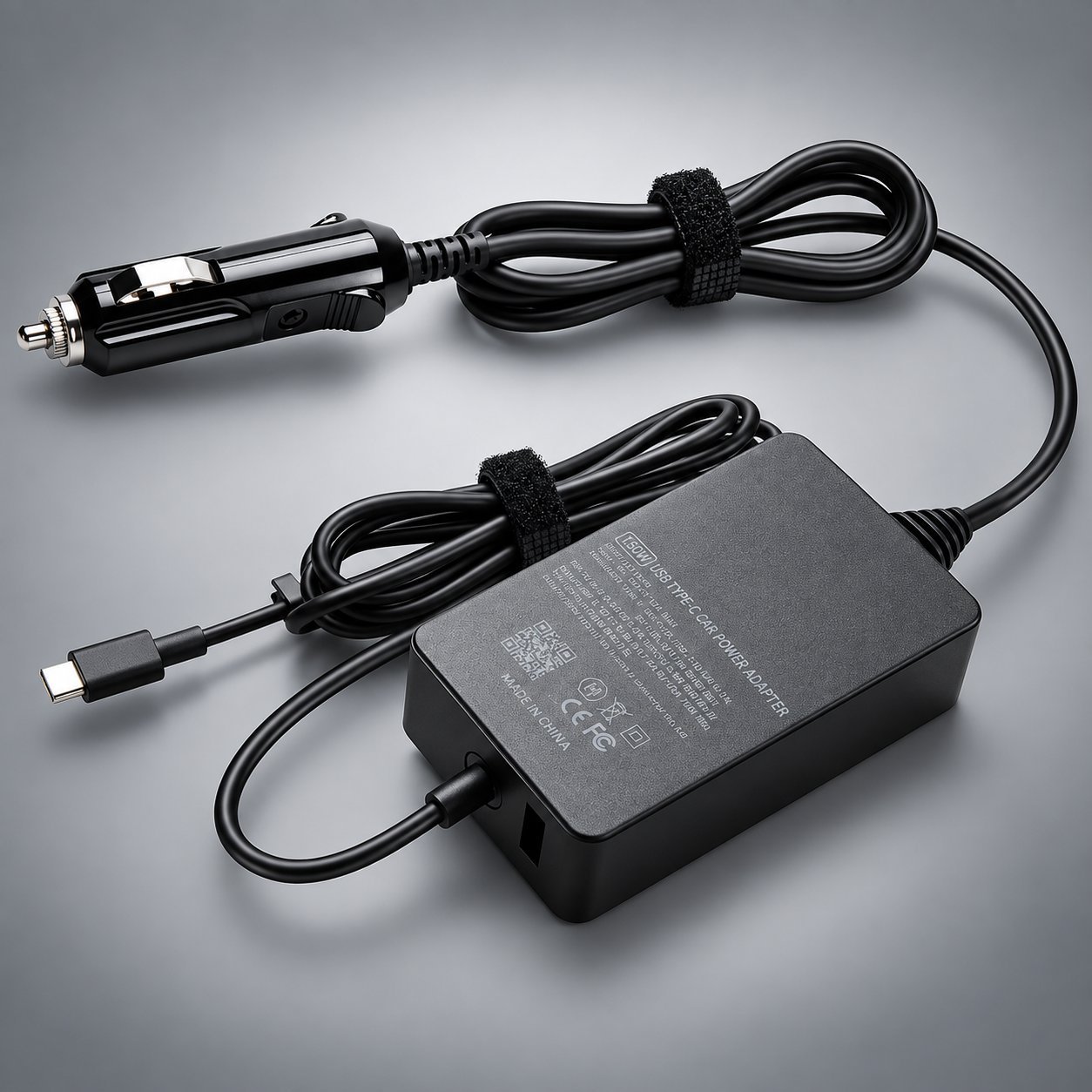
High-Wattage Laptop Car Chargers
Anything above 65W per port targets USB-C laptop users. These units need heavier internal components and better heat dissipation, which pushes unit cost up and puts stricter demands on the safety IC. Confirm ABS plus PC fireproof housing and a safety chip covering overcurrent, overvoltage, overheating, and overload before approving any high-watt model for import.
Key Specs to Evaluate Before You Order
| Spec | What to Check | Target Value |
|---|---|---|
| Per-port wattage | Single-port output, not combined total | 30W min for phones, 60W min for laptops |
| Input voltage range | 12V only vs. 12V/24V dual-input | 12V/24V for trucks, RVs, commercial fleets |
| Protocol support | PD, QC3.0, PPS listed per port | PD plus PPS for full device compatibility |
| Housing material | ABS only vs. ABS plus PC fireproof | ABS plus PC fireproof for car applications |
| Safety IC coverage | Overcurrent, overvoltage, overheating, overload | All four required |
| Certifications | Per model, per export market | CE/FCC/RoHS minimum, UL/ETL for US retail |
Fast-Charge Protocols: PD vs. QC3.0 vs. PPS
This is where most procurement buyers lose time. Here is what each protocol actually does.
USB-C Power Delivery (PD) lets the charger and device negotiate output voltage from 5V up to 20V. A charger running 20V at 3A delivers 60W. PD covers every iPhone 15 and later, USB-C Android flagships, iPads, and USB-C laptops. PD 3.1 raises the ceiling further, though vehicle sockets limit practical output regardless.
Quick Charge 3.0 (QC3.0) adjusts voltage in 200mV increments from 3.6V to 20V, capping at 18W per USB-A port. It is standard on most non-Apple Android phones from the past several years. QC3.0 does not equal Samsung Super Fast Charging.
PPS (Programmable Power Supply) is an extension within USB PD 3.0 that supplies variable voltage in fine steps. Samsung Galaxy devices use PPS for Super Fast Charging. If your target market uses Samsung S-series flagships, PPS support must be confirmed per port on the spec sheet, not just listed in the protocol table.
| Protocol | Practical Output | Compatible Devices | Key Point |
|---|---|---|---|
| USB-C PD 3.0 | Up to 100W | iPhones, USB-C Android, tablets, laptops | Current benchmark for new products |
| USB-C PD 3.1 | Up to 240W EPR | High-watt laptops | Car socket limits actual delivery |
| QC3.0 | 18W per USB-A port | QC-compatible Android phones | Good for backward compatibility on USB-A |
| PPS | Variable, up to 45W practical | Samsung Super Fast Charging devices | Must be listed per port in spec docs |
Certifications and Compliance You Must Check
Certifications are not cosmetic. They are the difference between a shipment that clears customs and one that does not.
CE covers electromagnetic compatibility and safety for any EU sale. You need the Declaration of Conformity tied to your exact model number, not a generic category certificate.
FCC is the US emissions compliance requirement. It does not replace electrical safety testing. Many US retailers additionally require UL or ETL documentation before a product goes on the shelf.
RoHS restricts hazardous substances. Any product sold into the EU, UK, or California needs a model-specific RoHS test report. A logo on the packaging with no traceable test document behind it is not compliant.
E-mark applies to vehicle electronics in the EU. If your buyers are automotive distributors or you are targeting OEM vehicle channels in Europe, E-mark is a requirement, not a recommendation.
CCC covers domestic Chinese market sales. Confirm it separately per model if your customer resells in China.
SUNDA’s 120W four-port car charger carries CE, FCC, RoHS, UL, ETL, SAA, ISO9001, and CCC. That is one of the broadest certification sets in the current line. Confirm coverage for any other model before citing certifications in your product listing or import documents.
For a breakdown of what each standard governs and what documentation to request from any factory, see thecar charger safety and certification guide.
How to Choose a Car Charger Manufacturer: 6 Things to Confirm
1. MOQ and tiered pricing. Confirm the minimum order quantity for the specific model, not the product category. SUNDA’s production line flexes to accommodate smaller initial orders. Get the figure in writing before investing in packaging design.
2. OEM vs. ODM scope. OEM puts your brand on an existing housing with no tooling surcharge. ODM creates a new housing, port configuration, or form factor, and involves a tooling investment and a sample round before mass production. Know which path your margin model needs before requesting a quote.
3. Sample turnaround. Build a pre-production sample round into your procurement calendar. A factory that cannot deliver a confirmed sample in under 10 business days typically does not have enough scheduling flexibility for responsive reorder cycles.
4. Model-specific lead times. SUNDA’s company profile states 7 to 15 days. Confirmed product pages for specific models show 15 to 20 days for regular orders after an initial run. Get the lead time for your model in writing on the PO, not from the website’s general page.
5. Model-specific certificates. A CE certificate issued for Model A does not cover Model B. Request documentation tied to your exact model number. This is one of the most common compliance gaps in first-time sourcing.
6. QC process and warranty. Ask for the in-house QC checklist and the safety IC test protocol. SUNDA’s confirmed product-page warranty is 18 months, with after-sales support resolution within 2 business days of a reported defect. Verify both apply to your order quantity before signing the PO.
SUNDA’s 2026 Car Charger Line: Confirmed Models
All specs below are verified from live szsunda.com product pages. Confirm current availability and per-port output tables directly with the SUNDA sourcing team before finalizing a spec for your purchase order.
120W Four-Port Car Charger
Two USB-C ports at PD 60W/PPS 60W each. Two USB-A ports at QC3.0 18W each. Works on 12V and 24V vehicle sockets. ABS plus PC fireproof housing with a safety IC covering overcurrent, overheating, overvoltage, and overload.
Certifications: CE, FCC, RoHS, UL, ETL, SAA, ISO9001, CCC.
Best for: Fleet procurement, rideshare operators, retail SKUs targeting laptop-plus-phone users.
View the 120W four-port car charger
90W Dual-Port Car Charger
One USB-A port at 45W max. One USB-C port at 45W max with PPS output up to 42W for Samsung Super Fast Charging. Supports QC5, PD 3.1, PD 3.0, PPS, QC3.0, QC2.0, and FCP. 12V/24V input.
Certifications: CE, FCC, RoHS.
Best for: Two-device users who do not need four ports. Also fits buyers targeting Samsung-heavy markets.
View the 90W dual-port car charger
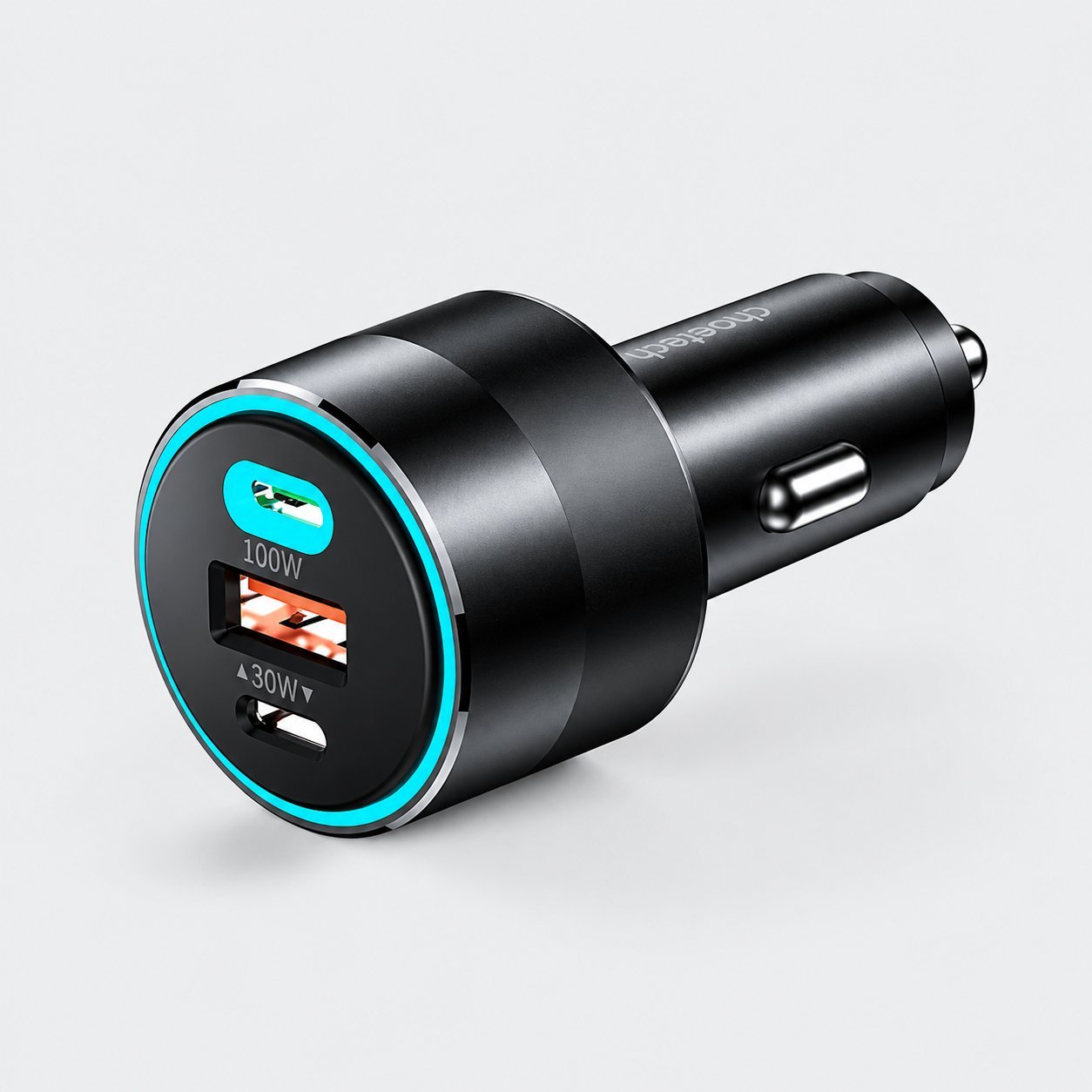
40W Dual-Port Car Charger
USB-C port at PD 20W max. USB-A port at 20W max. Combined 40W total output. LED indicator, compact housing, 12V/24V input. Protocols: QC5, PD 3.1, PD 3.0, PPS, QC3.0, QC2.0, FCP.
Certifications: CE, FCC, RoHS.
Best for: Price-sensitive retail channels, entry-level private-label SKUs, budget fleet procurement.
View the 40W dual-port car charger
Master Comparison
| Model | Total Output | USB-C Config | USB-A Config | Protocols | Certifications |
|---|---|---|---|---|---|
| 120W Four-Port | 120W | 2 ports, 60W PD/PPS each | 2 ports, 18W QC3.0 each | PD 3.0/3.1, PPS, QC3.0 | CE, FCC, RoHS, UL, ETL, SAA, ISO9001, CCC |
| 90W Dual-Port | 90W | 1 port, 45W PD/PPS | 1 port, 45W QC | PD 3.1, PPS, QC5, QC3.0 | CE, FCC, RoHS |
| 40W Dual-Port | 40W | 1 port, 20W PD | 1 port, 20W QC | PD 3.1, PPS, QC5, QC3.0 | CE, FCC, RoHS |
Private Label and Customization Options
SUNDA handles OEM and ODM orders from a single in-house team. OEM puts your brand on an existing housing through logo laser engraving, custom packaging color, and a multilingual manual, with no tooling surcharge. ODM builds a new housing or port configuration from scratch, which involves a tooling cost and a sample round before production runs.
The right path depends on your target retail price point and annual volume. Both start from the same sourcing contact.
Common Buying Mistakes to Avoid
Accepting headline wattage without the per-port breakdown. A 120W charger does not deliver 120W to a single device. The output splits across ports, and that split changes depending on how many ports are occupied. Always request the full output table.
Treating QC3.0 as equivalent to Samsung Super Fast Charging. QC3.0 gets a Samsung phone to a standard fast-charge rate, not its peak. PPS support, confirmed per port in the spec sheet, is required for Super Fast Charging.
Ordering from a generic certificate. A CE certificate issued for Model A is not valid for Model B. Request documentation tied to your exact model number.
Ignoring the input voltage range. A 12V-only charger installed in a 24V commercial truck is a liability issue. Confirm 12V/24V compatibility before ordering any unit that could end up in a fleet vehicle.
Skipping the sample round. A sample order costs a fraction of a container. It lets you test the actual charge speed against the listed protocols, check housing quality, and confirm certification documents before committing to volume.
Not locking lead time on the purchase order. A factory’s website may show a general delivery window of 7 to 15 days. The actual lead time for your model, at your order quantity, may be different. Put it in the PO.
Source Your 2026 Car Charger Line
SUNDA has manufactured car chargers and mobile charging accessories since 2009, operating from a 2,000 sqm factory in Baoan District, Shenzhen. The full SUNDA car charger range runs CE, CCC, RoHS, and E-mark certifications, with select models also carrying FCC, UL, ETL, SAA, and ISO9001. OEM and ODM orders are both handled in-house, from tooling through final QC.
If you are evaluating a private-label program, comparing wattage configurations for a fleet order, or want a certification package for a specific export market, contact the SUNDA sourcing team with your target market, expected annual volume, and the device types your end customers use. That is enough information for a quote and a model recommendation.
Request a Factory QuoteFAQ
What is the best car charger in 2026?
For most resale and fleet buyers, a multi-port unit with at least one 60W USB-C PD port and PPS support covers the widest range of devices. The 120W four-port model handles phone plus laptop plus two additional devices simultaneously, making it the top pick for rideshare operators and fleet procurement.
Are USB-C PD car chargers worth it for resale?
Yes. USB-C PD is the charging standard on every iPhone 15 and later, every recent Android flagship, and most USB-C tablets. A charger without USB-C PD is a harder sell in every 2026 retail channel.
What certifications do I need to import car chargers to the US?
FCC certification is mandatory. Most US retail buyers also require UL or ETL safety certification for shelf-ready products. If your distribution reaches California or EU markets, RoHS test reports per model are also required.
Can I put my own brand on car chargers?
Yes. SUNDA supports custom logo on housing, custom packaging, and multilingual manuals. OEM uses the existing housing design with no tooling cost. ODM creates a new housing and requires a tooling investment and sample round before mass production.
How many watts do I need in a car charger?
For one smartphone: 30W USB-C PD minimum. For a phone plus a tablet: 51W combined minimum. For a phone plus a USB-C laptop: 90W minimum, with at least one port that sustains 45W or higher when both ports are occupied.
Why will some phones not fast-charge through a car charger?
Three common causes: the charger does not support the phone’s fast-charging protocol, the cable is rated too low for the required current, or the phone is in a thermal protection mode. Protocol support and a rated USB-C cable solve the first two.
12V vs. 24V: which socket for trucks and commercial vehicles?
Trucks and some RVs run 24V electrical systems. A 12V-only charger may not function safely in a 24V vehicle. Any charger intended for fleet, commercial, or RV use should be confirmed 12V/24V dual-input before purchase.
How do I verify a factory’s actual quality level?
Request ISO9001 certification, model-specific CE and FCC documentation, and the factory’s QC process document. Test a sample against the spec sheet before production runs. Confirm the safety IC covers overcurrent, overvoltage, overheating, and overload, not just in marketing copy but in the product spec.