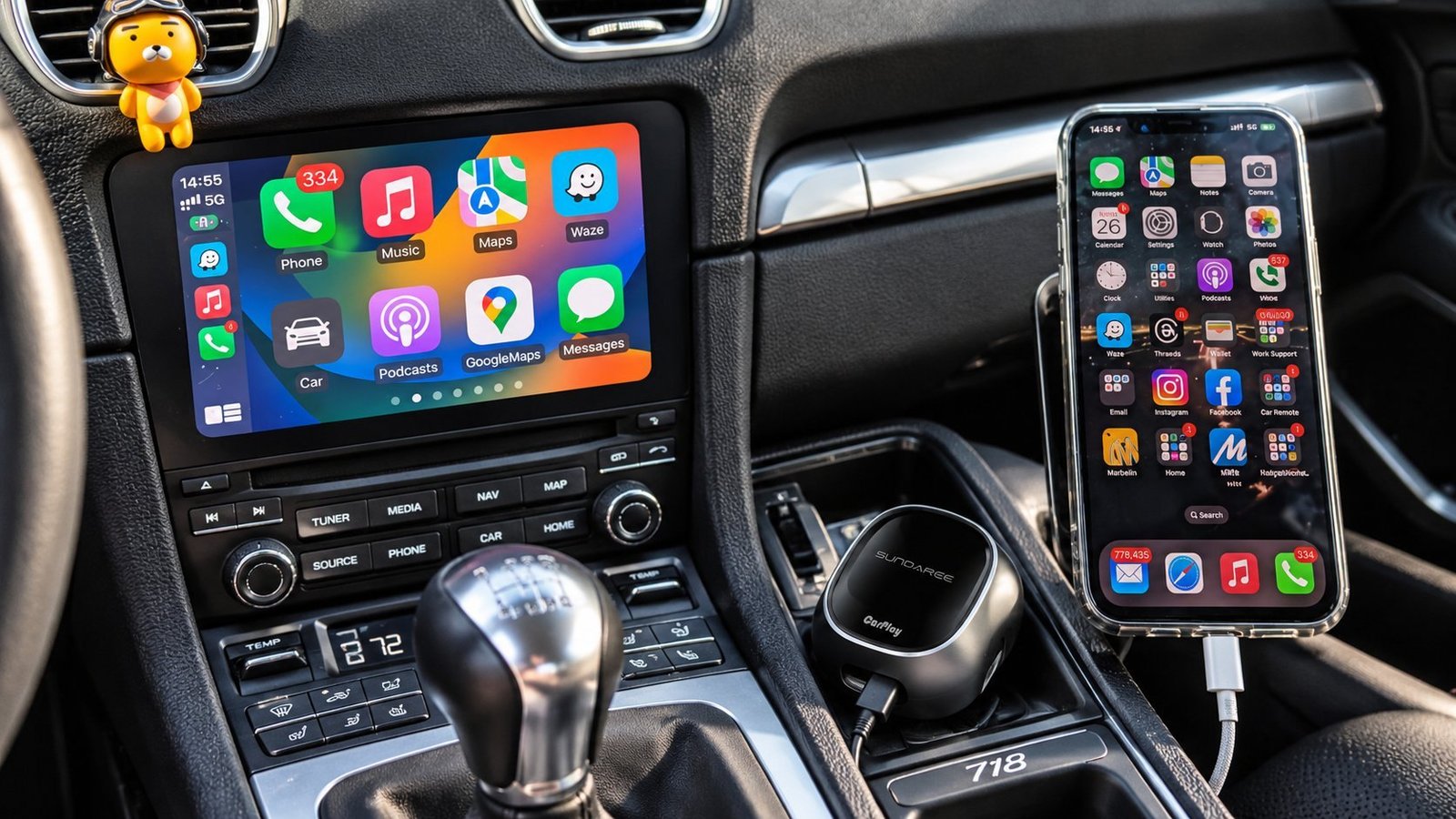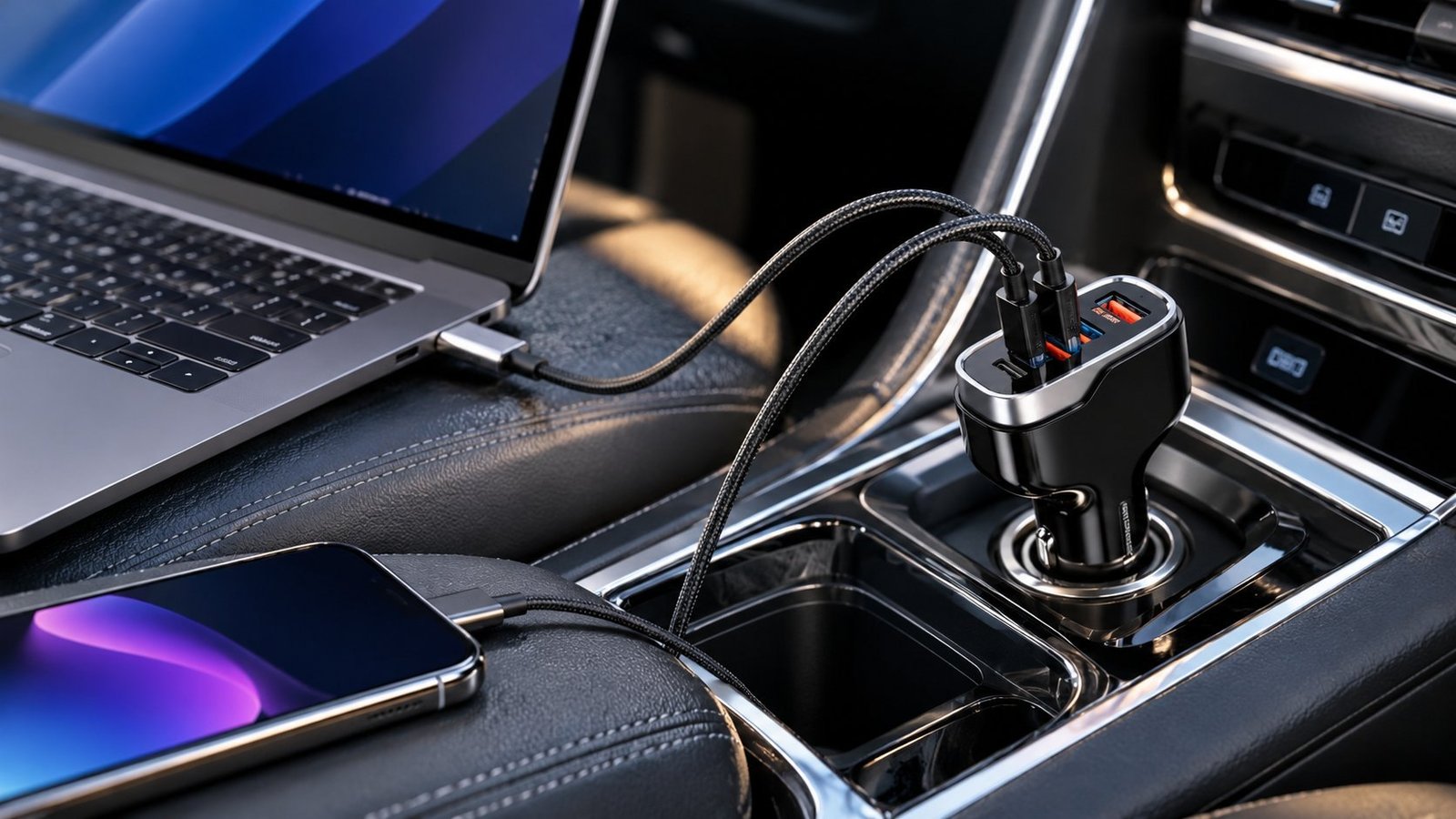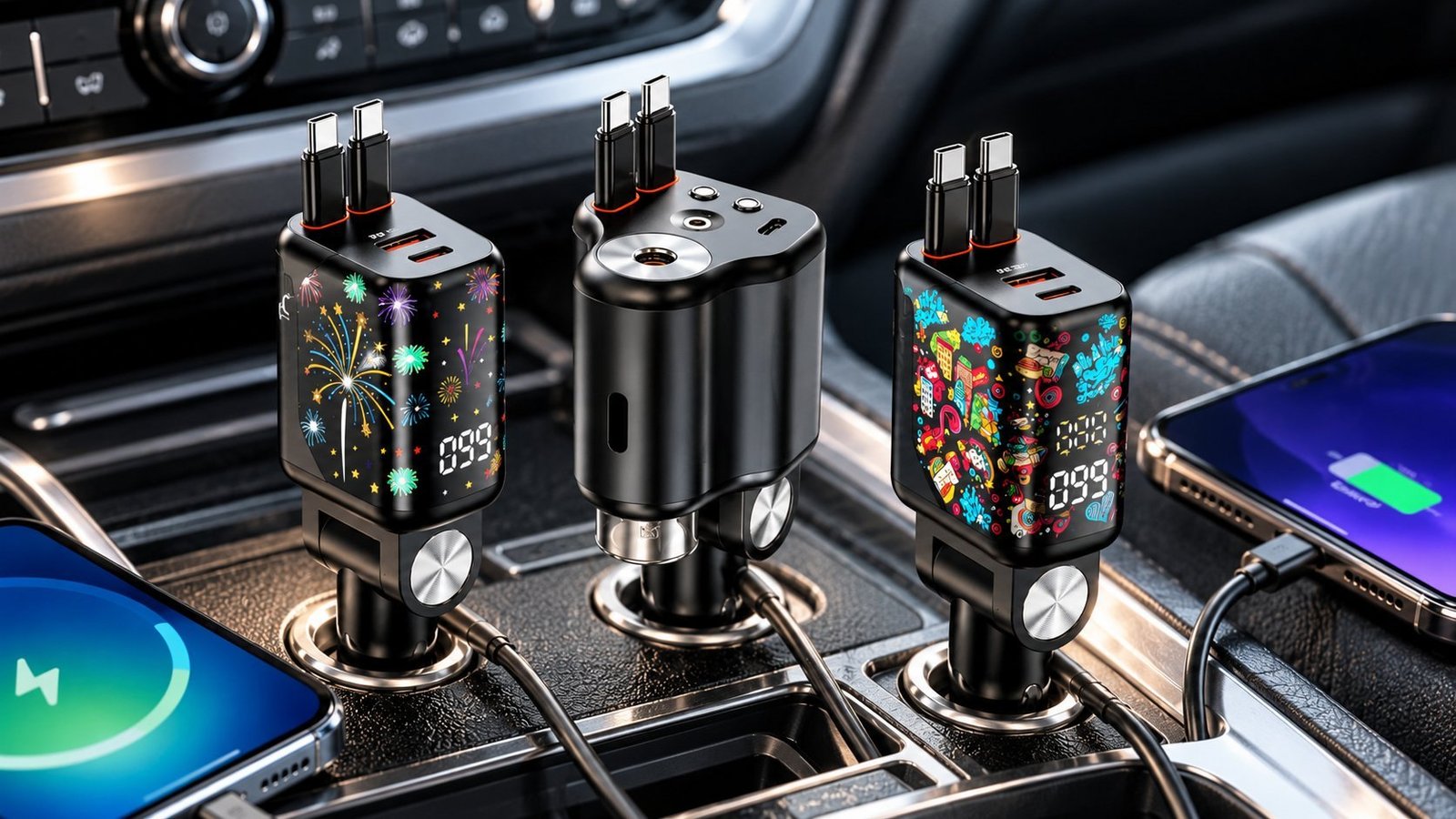
Android car charging splits into two completely separate problems: power and data. Most charging slowly complaints and most "Android Auto isn't connecting" complaints trace to mixing up the two, or using hardware designed for one job on the other. This guide untangles them for 2026 devices, covering Samsung Galaxy S-series PPS charging, Pixel PD behavior, Android Auto USB adapters, and the spec checks that tell you whether your car charger actually works with your phone before you plug in.
Android phones charge fine from any 18W or higher PD or PPS car charger with a full-data USB-C cable. Android Auto is a separate system that needs a data-capable USB connection or a wireless adapter. A charge-only port does not support Android Auto regardless of wattage.
Charging vs Android Auto: Two Different Jobs
The single most common confusion in Android car charging is treating a USB-C car charger port and an Android Auto connection as the same thing. They are not.
| Task | What you actually need |
|---|---|
| Fast-charge your phone | USB-C car charger with PD or PPS, 18W minimum |
| Run Android Auto | Data-capable USB port on the head unit, or wireless adapter |
| Fast-charge AND run Android Auto | Separate connections: charger for power, head unit USB for data |
| Wireless Android Auto | Wireless adapter dongle plugged into head unit USB |
Charging moves electrons from the charger into your phone battery. The protocol is Power Delivery (PD) or PPS. It runs through the USB-C power pins and the CC negotiation pin. No data transfer is involved.
Android Auto sends display and audio data from your phone to the head unit. It uses the USB-C data pins and requires a head unit that runs Android Auto in wired mode. The head unit USB port must support data, not just charging. A car charger port, even a fast one, cannot act as an Android Auto connection because it lacks the host-mode data interface.
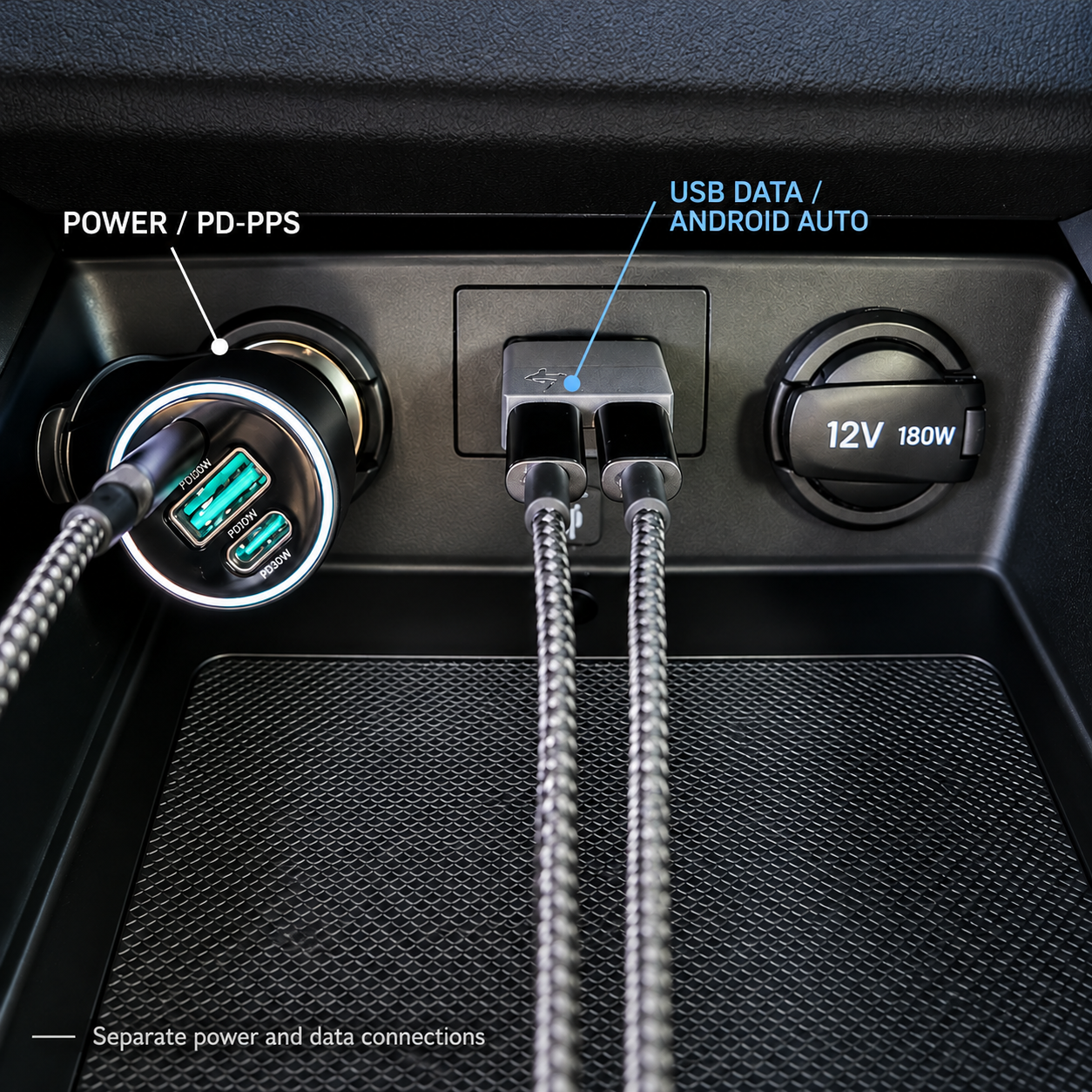
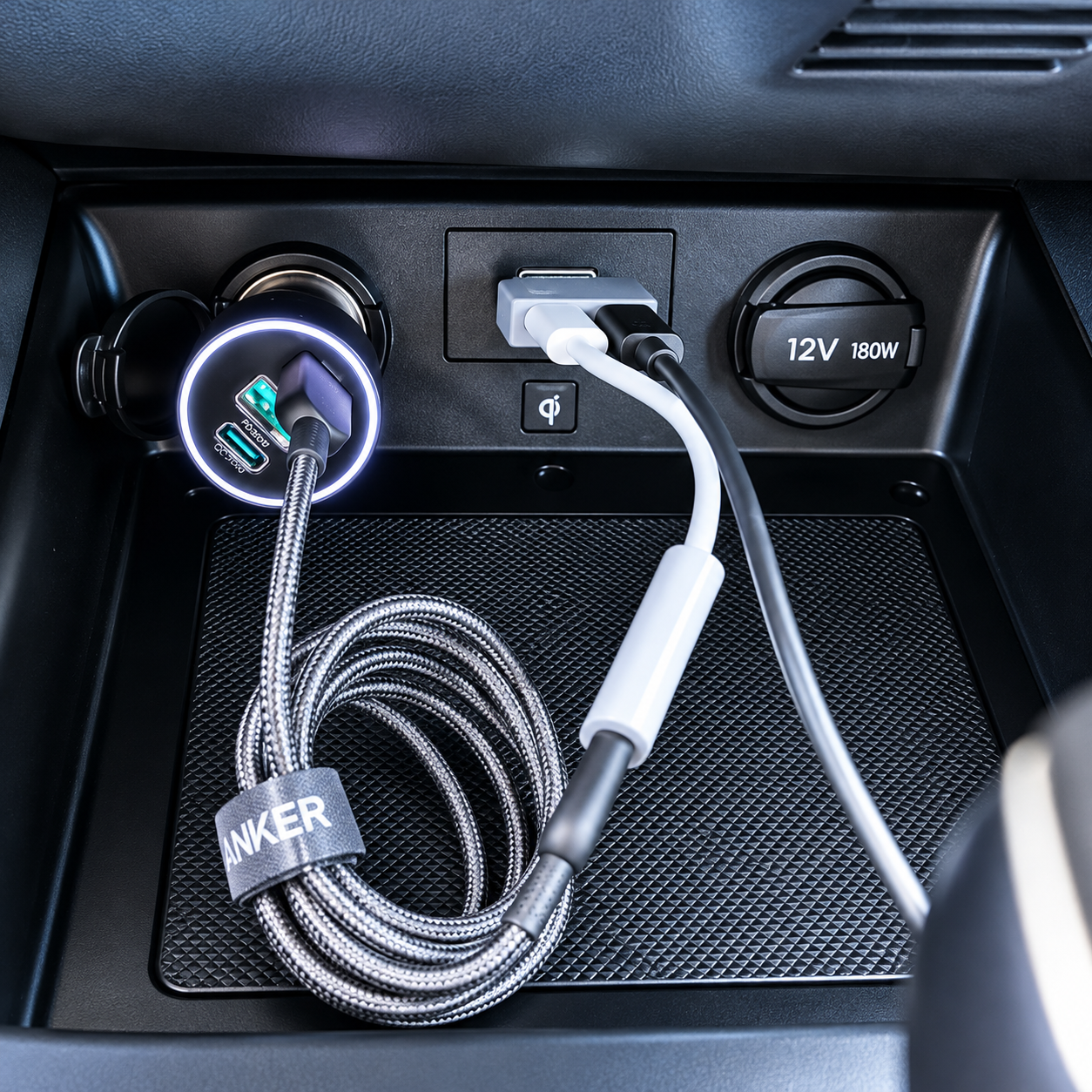
Android Auto USB adapters are wireless-to-wired conversion dongles. You plug the adapter into your head unit USB port. The adapter connects to your phone over Wi-Fi or Bluetooth. The adapter handles the Android Auto session wirelessly while the head unit sees it as a wired connection. These are data devices, not charging devices. They do not charge your phone.
Samsung: PPS and Super Fast Charging in the Car
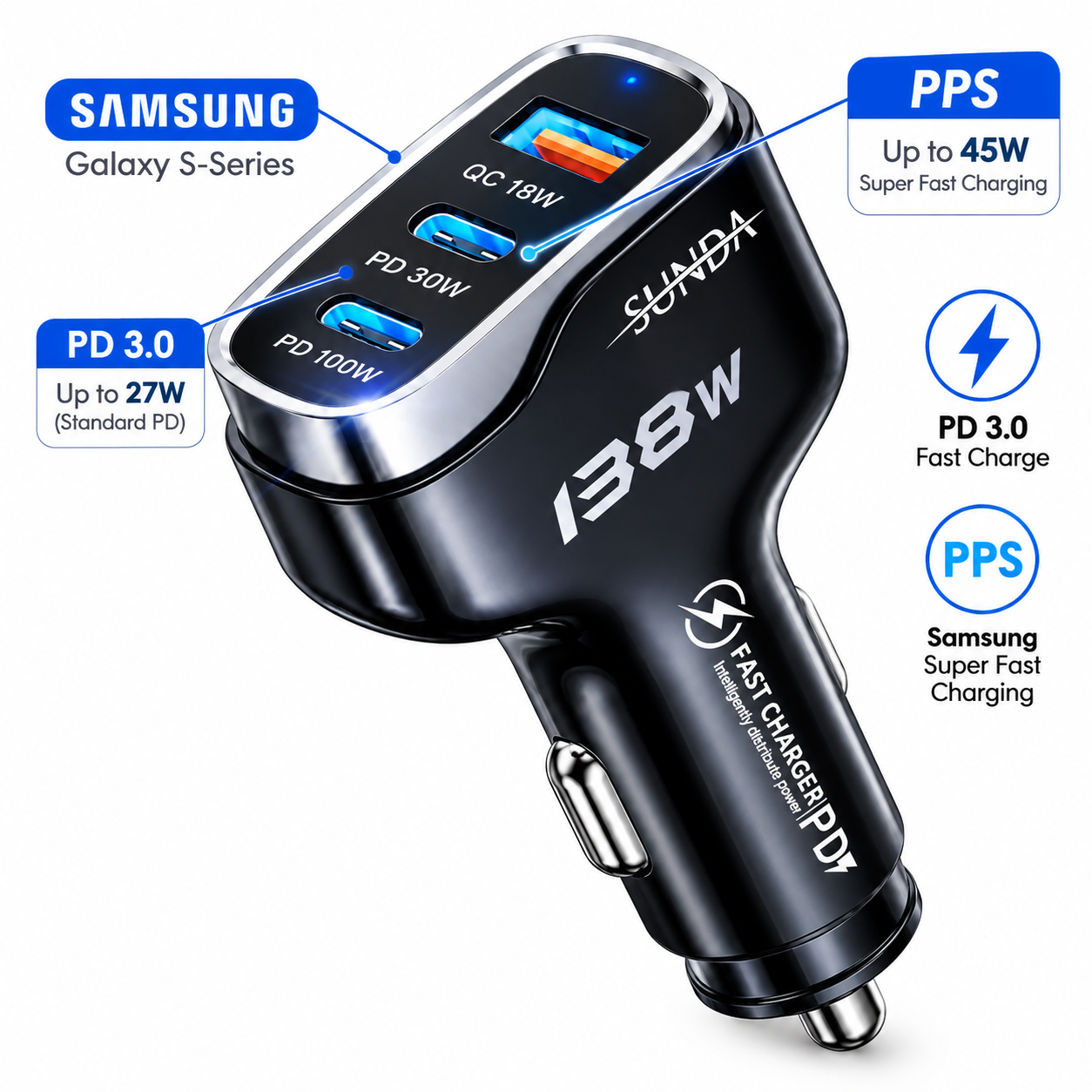
Samsung Galaxy S-series phones use two fast-charging protocols: standard PD 3.0 and PPS (Programmable Power Supply). Which one your car charger supports determines how fast your Samsung charges.
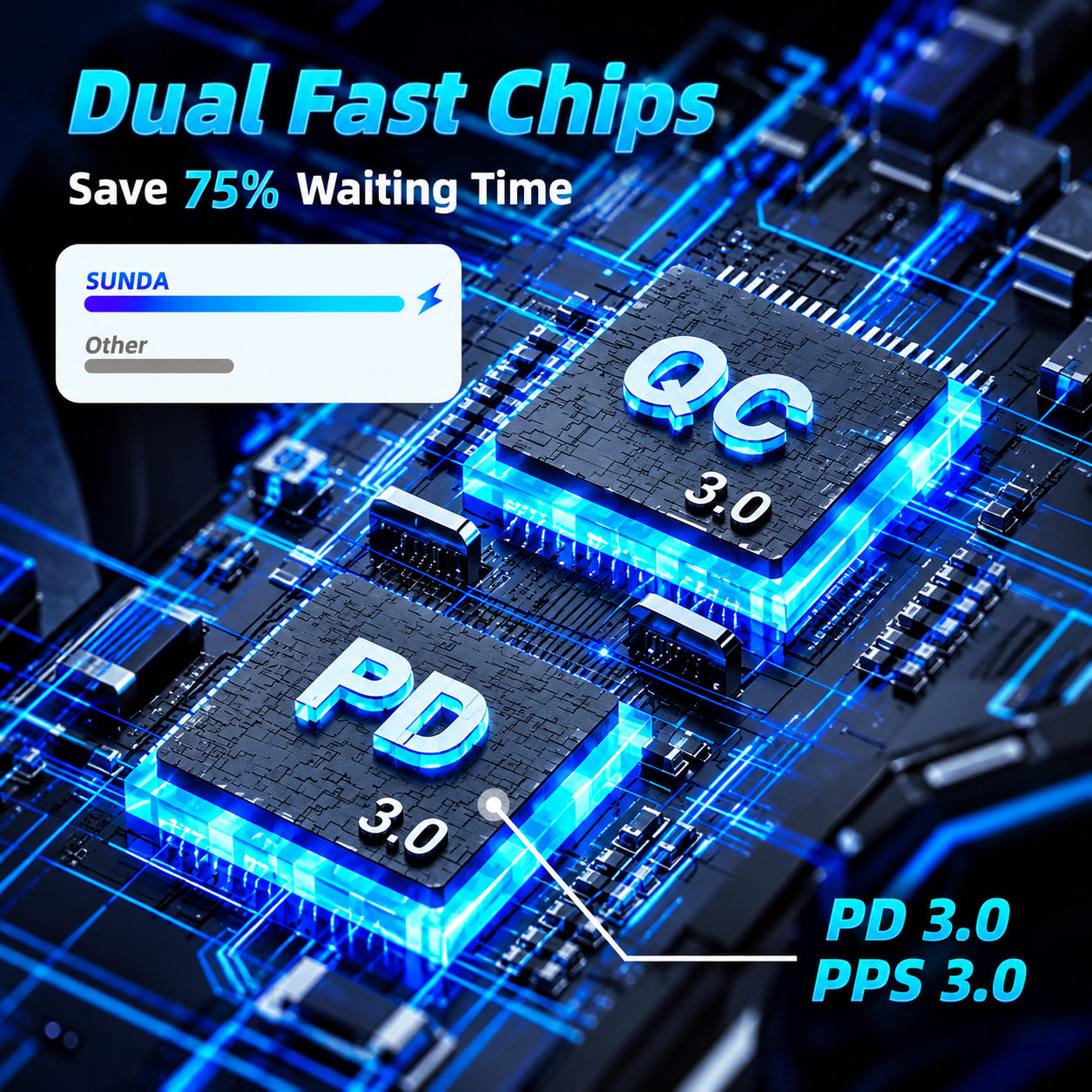
Standard PD 3.0 supplies fixed voltage steps: 5V, 9V, 12V, 15V, 20V. A Samsung Galaxy S25 charging at 9V/3A (27W) from a standard PD charger is doing fine, but it is not at peak speed.
PPS supplies variable voltage in 20mV increments between 3.3V and 21V. Samsung's Super Fast Charging 2.0 (45W on S22+ and newer flagships) requires PPS to negotiate the right voltage and current for that higher power level. Without PPS, the phone falls back to standard PD and charges at around 25W to 27W instead of 45W.
How to read the spec sheet:
| Spec you need | What it means | What to check |
|---|---|---|
| PPS | Programmable Power Supply, Samsung 45W | Listed as PPS or APDO in PDO table |
| PD 3.0 | Standard fast charge | Lists 9V/3A or higher |
| Total port wattage | Power budget per port | Must be 45W+ for Samsung peak |
| Per-port PDO table | Exact voltage steps | Ask for this before ordering |
For the best car charger for Samsung Galaxy S-series at peak charging speed, you need a charger that lists PPS explicitly in its PDO table and provides at least 45W on the USB-C port. A charger that only says "PD 3.0" without PPS does not hit Samsung's 45W ceiling.
SUNDA produces PPS-capable car chargers with per-port PDO documentation available on request, from 65W dual-port up to 230W multi-port configurations.
Pixel and Stock Android: What They Negotiate
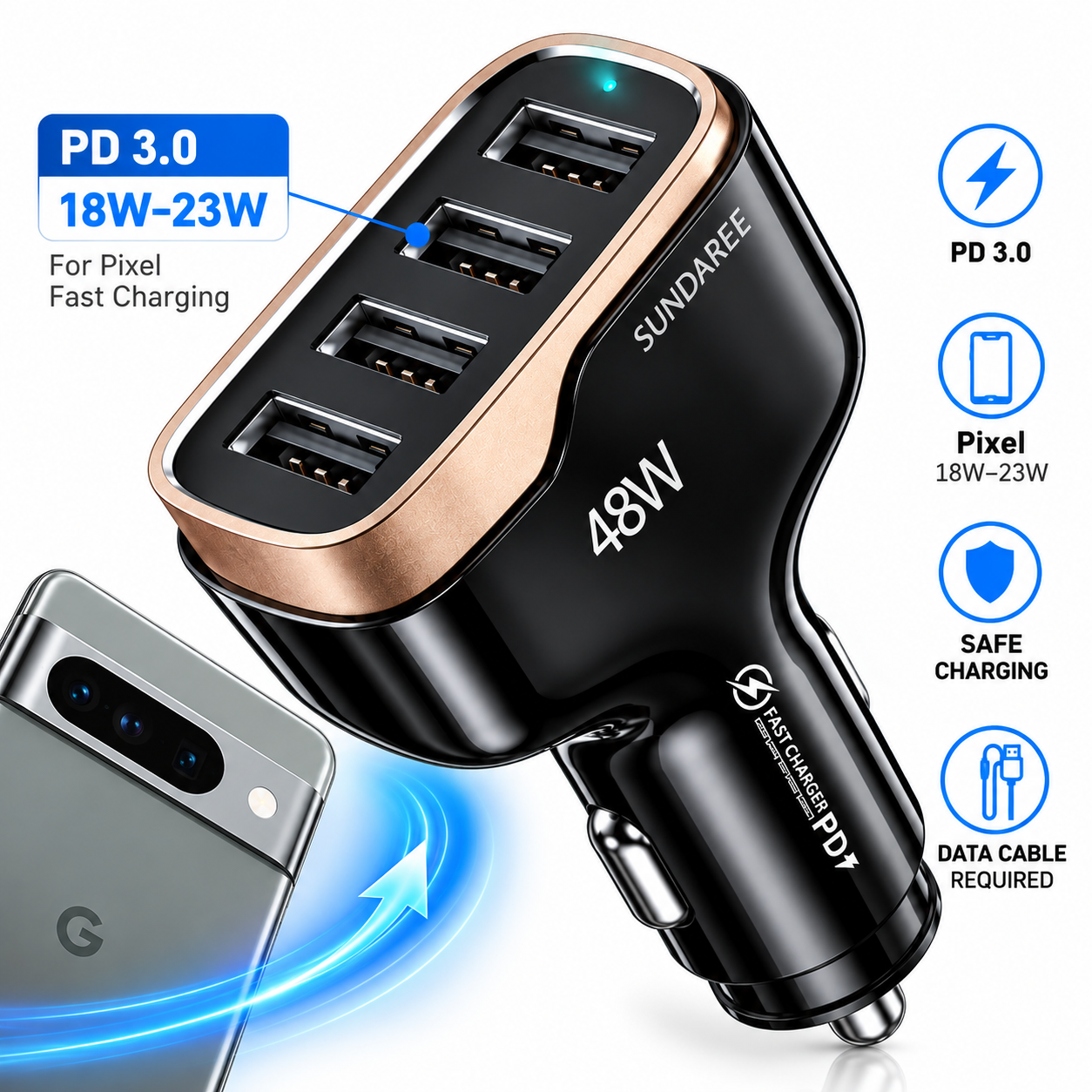
Google Pixel phones use standard USB Power Delivery without PPS. The Pixel 9 Pro charges at up to 21W over PD. Earlier Pixel models range from 18W to 23W depending on generation.
A few things that trip up Pixel users in car charging setups:
Charge limit features. Pixel phones running Android 12 and later have an adaptive charging mode and a battery protection setting that caps charge at 80% overnight. These modes do not activate during a typical car trip, but if you have manually enabled "Limit to 80%" in battery settings, the phone will not charge past that point regardless of your charger's output.
Cable data lines. Pixel phones use the USB-C Authentication protocol for some charging behaviors. A charge-only cable (no D+ and D- data lines, or no E-Mark chip on high-current cables) charges the Pixel at 5V/0.9A instead of negotiating the full PD profile. For full PD speed, use a cable that carries data lines. For 100W charging, an E-Mark cable is required.
USB-C quirks. The Pixel checks the cable's CC1/CC2 pins on connection. A damaged or counterfeit cable that wires the CC pins incorrectly triggers a "Charging slowly" notification even from a fast charger. Swapping the cable solves most Pixel "won't fast-charge" complaints before the charger is ever the issue.
Common Failure Cases
Charging slowly on a Samsung S9 or older Galaxy. Older Samsung flagship phones (S8, S9, Note 8, Note 9) use Adaptive Fast Charging (AFC), which runs over the USB-A D+ and D- signaling pins. These phones do not support PD. A USB-C PD charger charges them at 5V only unless the charger also supports AFC or a Samsung-compatible QuickCharge profile on its USB-A port. The fix: use a charger that lists QC3.0 or AFC compatibility, not just PD.
PD charger connected, phone charges at 5W. This is almost always the cable. Charge-only USB-C cables, which omit the data-line wires, bypass the PD negotiation and fall back to 5V/0.9A (5W). Replace the cable with a confirmed full-data USB-C cable. SUNDA's USB-C data cables carry all data lines and are confirmed compatible with PD negotiation on current Samsung and Pixel devices.
Android Auto drops connection randomly. Random drops during wired Android Auto sessions typically trace to a loose or worn USB-C port, a cable that doesn't seat firmly, or a cable that does not maintain consistent D+ and D- contact. A braided, full-data USB-C cable with a tight-fitting connector resolves most drop complaints. Cables under 1m in length are more reliable for wired Android Auto than longer cables at the same build quality.
Heat from the charger socket. A charger that runs hot in the 12V socket is usually drawing more current than the port's fuse rating supports, or has no thermal protection. Every charger in SUNDA's line includes OVP, OCP, SCP, and thermal shutdown protection as standard.
Best Charger Specs per Android Device
| Device | Protocol | Rated charge speed | Charger spec needed |
|---|---|---|---|
| Samsung Galaxy S25 Ultra | PPS | 45W | 45W+ PPS, USB-C port |
| Samsung Galaxy S24 / S24+ | PPS | 25W / 45W | 45W+ PPS for S24+ |
| Samsung Galaxy A54 / A55 | PD 3.0 | 25W | 25W PD, USB-C port |
| Samsung Galaxy S9 / Note 9 | AFC | 15W | QC3.0 or AFC via USB-A |
| Google Pixel 9 Pro | PD 3.0 | 21W | 25W+ PD, USB-C port |
| Google Pixel 8 | PD 3.0 | 18W | 18W+ PD, USB-C port |
| Google Pixel 6a | PD 3.0 | 18W | 18W+ PD, USB-C port |
| OnePlus, Xiaomi (generic) | PD 3.0 | 18W–33W | 33W+ PD, USB-C port |
For Android Auto on any device, the charger port spec does not matter. The data connection goes through your head unit's USB port or through a wireless adapter dongle. The charger handles power only.
If you need a charger that handles both Samsung PPS and Pixel PD without switching cables, a 65W dual-port unit with PPS covers both: the Samsung negotiates PPS and the Pixel negotiates standard PD from the same port.
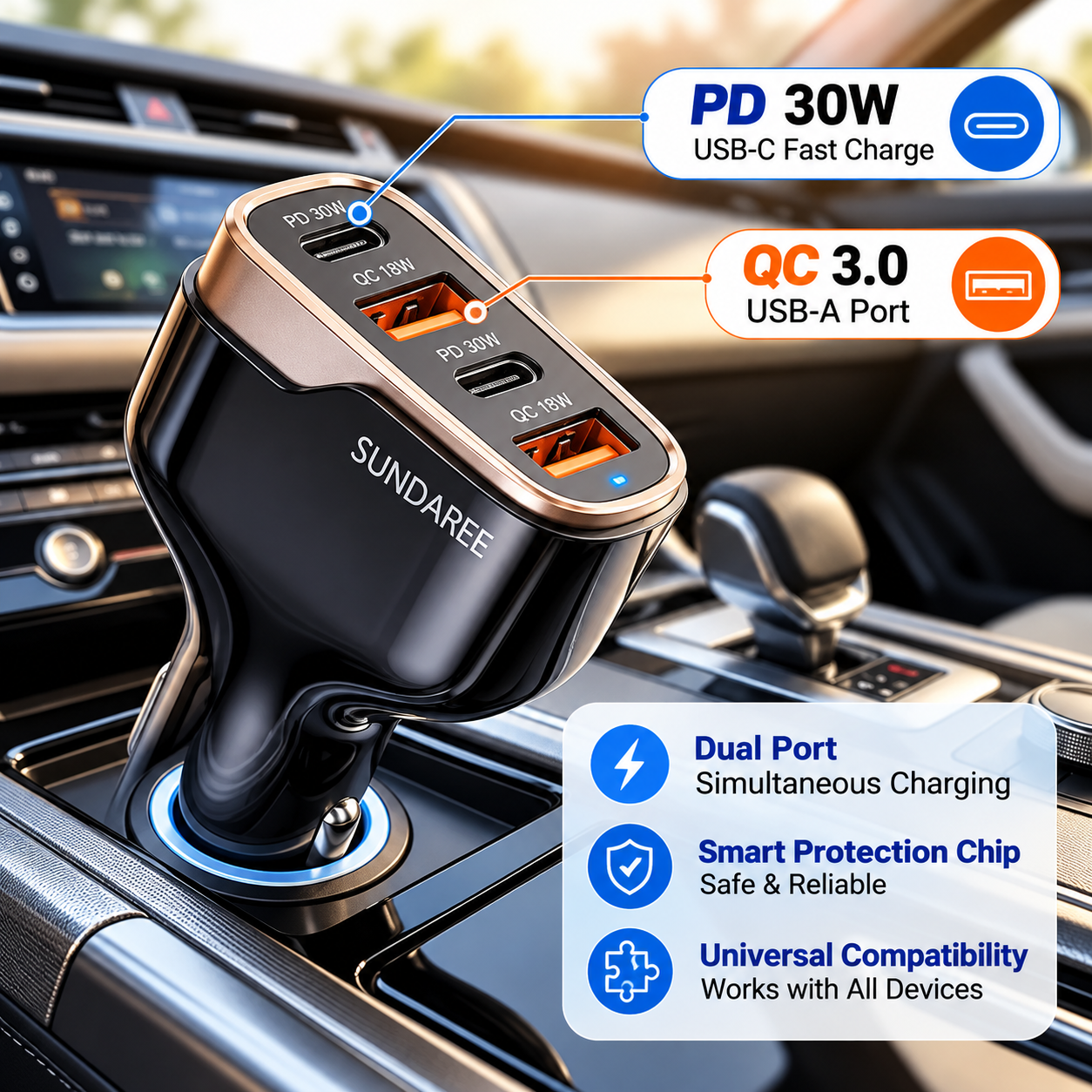
For wholesale buyers sourcing Android-compatible charger kits, pairing a 65W PPS car charger with a full-data USB-C cable solves the most common Android charging complaint at retail. SUNDA's wall charger range covers the same PPS and PD protocol tiers for home charging if a buyer wants a coordinated home-and-car bundle SKU.
Importer Note: Android-First SKUs
PPS support is the real differentiator in the Samsung-dominant Android market. Every market where Samsung holds top-three market share (Southeast Asia, the Middle East, South Korea, Latin America) has buyers who want 45W Super Fast Charging in the car. A charger without PPS undersells in those markets even if wattage looks comparable on the label.
The most commercially useful SKUs for Android-first sourcing programs:
- 65W dual-port with PPS: One SKU covers Samsung 45W and Pixel 21W from the same unit. Broad market appeal.
- 40W single USB-C with PPS: Lower price point, full Samsung compatibility, best for markets with mid-range Galaxy buyers.
- QC3.0 USB-A + PD USB-C combo: Required for markets where older Samsung Galaxy (S9-era, A-series without USB-C PD) still runs in significant volume.
SUNDA's CC53 series ships with PPS active and supports custom logo, packaging, and port configuration from 500 units per SKU. CE, FCC, RoHS, and E-Mark are standard on all current production.
Send your device target market and annual volume to the SUNDA team and receive a model recommendation and pricing within two business days.
Conclusion
Android car charging requires matching the protocol to the device. Samsung S-series at 45W needs PPS. Pixel charges on standard PD from 18W up. Older Samsung Galaxy phones with AFC need a QC3.0-compatible USB-A port. Android Auto runs on data, not on a charger port, and a wireless adapter handles the conversion for head units with no native wireless support. Get those three things right and the "charging slowly" complaints and Android Auto drop issues go away.
Source Android-Ready Car Chargers for Your Market
Need Samsung PPS, Pixel PD, or mixed Android charger kits for retail, fleet, or private-label programs? Send your target market and annual volume to the SUNDA sourcing team for a model recommendation.
FAQ
Do I need a special charger for Android Auto?
No. Android Auto does not use your car charger. It runs through your head unit's USB data port. Your charger handles power only. If you want wireless Android Auto on a head unit that only supports wired mode, you need a wireless-to-wired Android Auto USB adapter plugged into the head unit port. That adapter is a data device, not a charging device.
What is an Android Auto USB adapter?
An Android Auto USB adapter is a dongle that plugs into your head unit's USB port. It connects to your phone wirelessly (Wi-Fi plus Bluetooth pairing) and translates that wireless connection into the wired Android Auto signal the head unit expects. It lets you use wireless Android Auto on head units that only support the wired protocol. It does not charge your phone.
Does the car USB port charge Android phones?
It depends on the port. A charge-only USB-A port in the car (the kind built into the dashboard or center console of most 2015 to 2022 vehicles) typically outputs 5V at 1A or 2.4A, which is slow charging only. A USB-C PD port, if your vehicle has one, can fast-charge at 18W to 45W depending on the spec. A separate USB-C car charger plugged into the 12V socket is the fastest option for any Android phone.
What wattage does a Pixel need to fast-charge in the car?
Google Pixel phones need at least 18W PD via USB-C to fast-charge. The Pixel 9 Pro uses up to 21W. A 30W or 40W PD car charger covers all current Pixel models with headroom. Pixel phones do not require PPS. Standard PD 3.0 is sufficient. Use a full-data USB-C cable, not a charge-only cable, to allow PD negotiation.