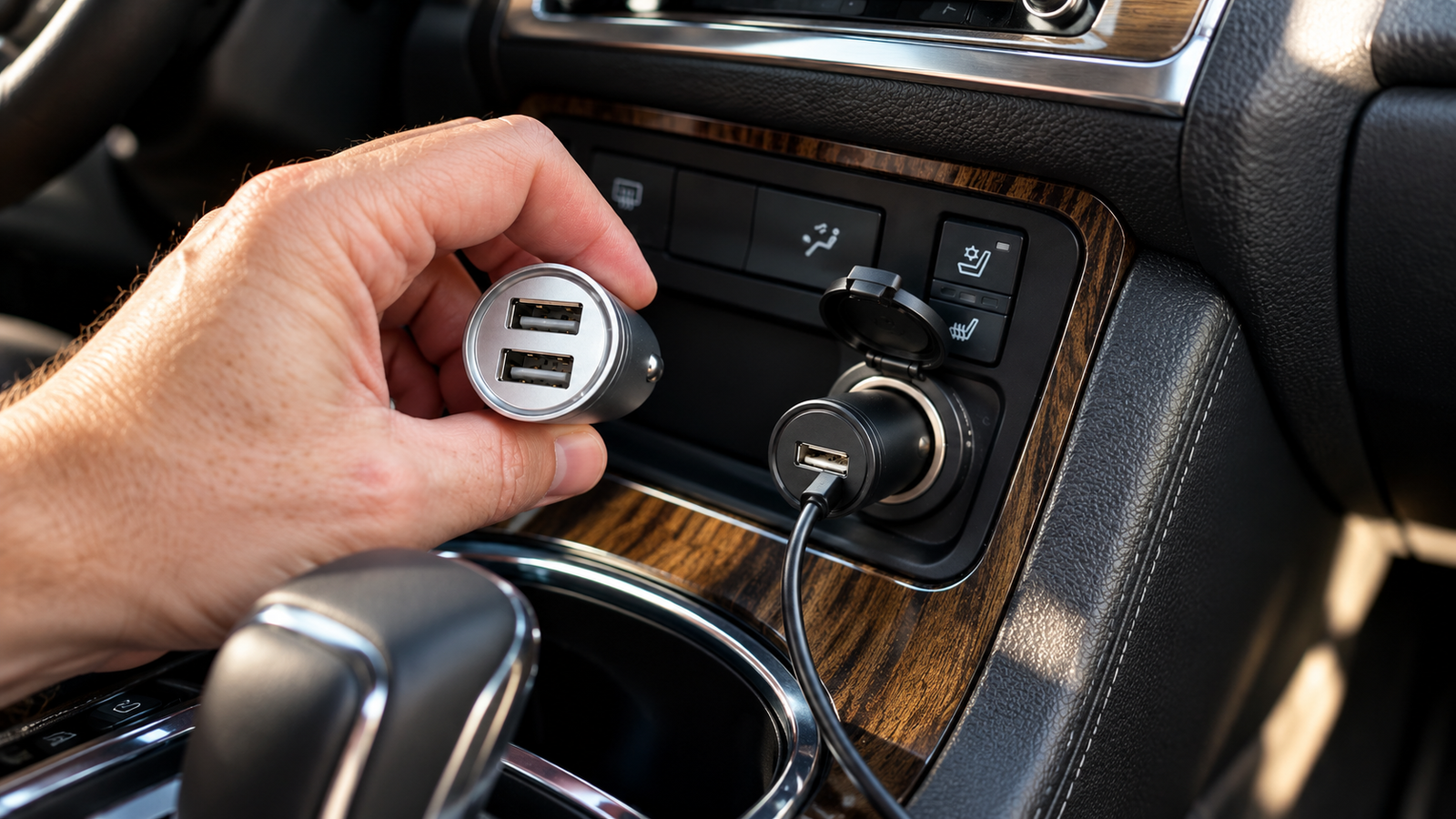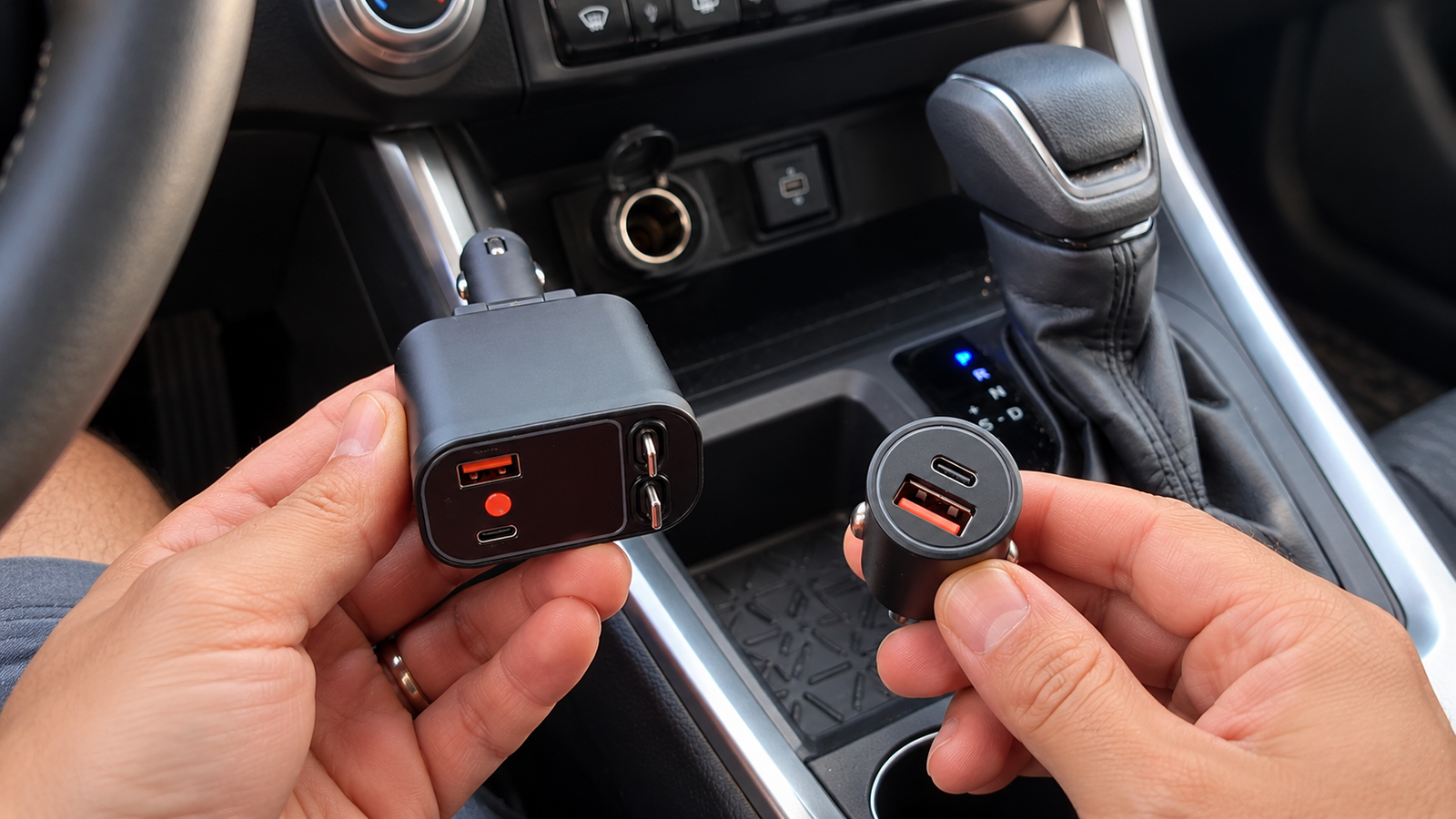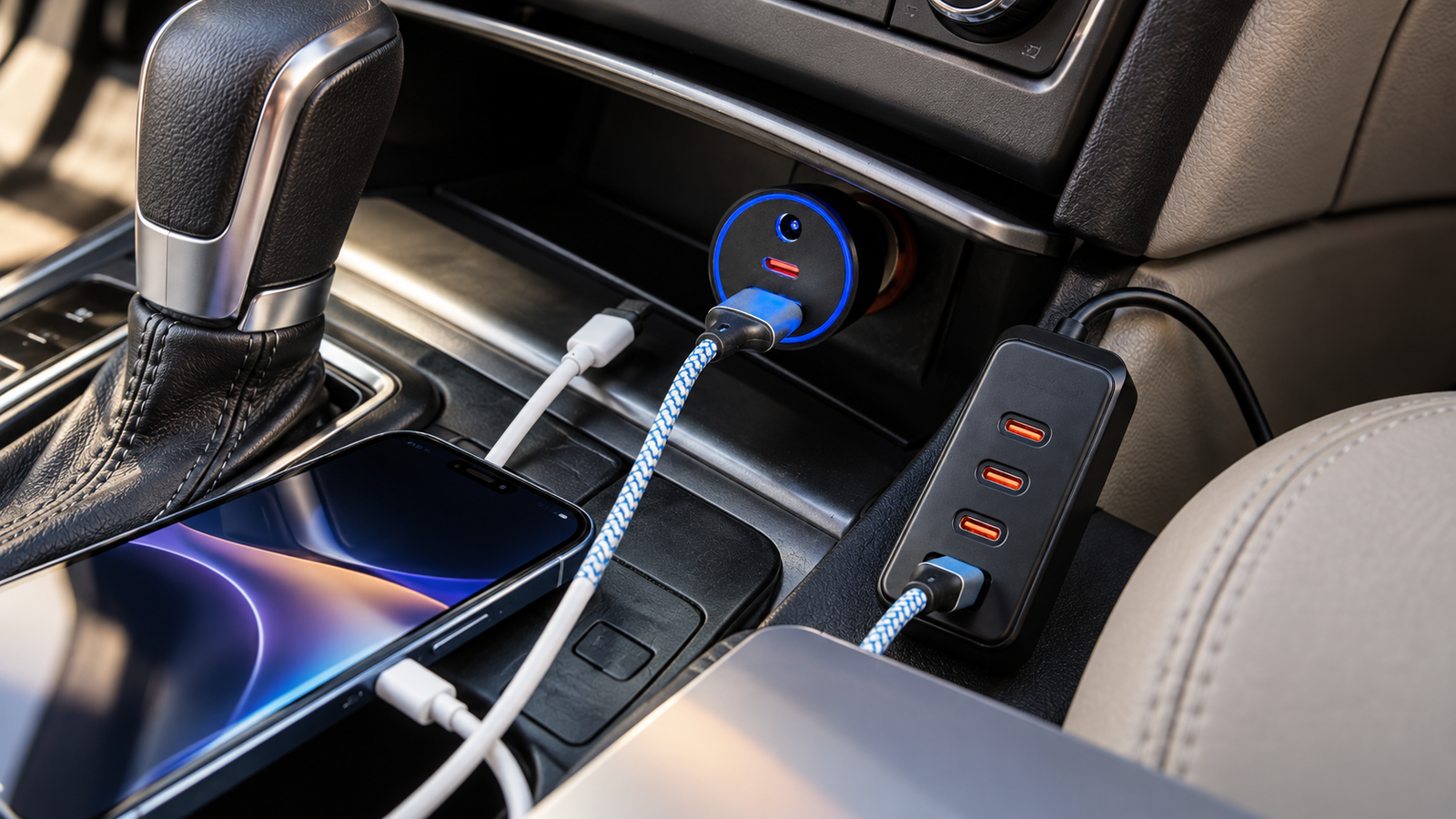
Your charger light comes on but your phone is not gaining charge. Or it charged yesterday and shows nothing today. In both cases there are exactly four places to look: the 12V socket, the charger, the cable, and the phone. Work through them in order and you will track down the fault in under five minutes.
If your car phone charger stops working, test in this sequence: confirm socket power, swap the cable, try a different charger, then check your phone. A blown socket fuse or a broken cable conductor near the plug accounts for more than 70% of reported failures.
Run This 2-Minute Check First
Before replacing anything, run through this sequence. It takes under two minutes.
- Swap your cable. Use one you know works. If charging starts, your original cable is the fault.
- Try the charger in another socket or vehicle. If it works elsewhere, the fault is in your socket.
- Try a different charger in your socket. If that one charges, your original charger is the fault.
- Plug something else into the problem socket. A different phone or dash cam confirms whether the socket is live.
- Pull the socket fuse. Your fuse box has a fuse labeled ACC, CIG, or PWR for the accessory circuit. A broken element visible in the fuse window is your fix.
- Test your phone on a wall adapter. If it does not charge there either, the fault is in the phone.
Causes 1–4: Your 12V Socket
Cause 1
Blown socket fuse. The most common single fault we see in warranty returns. A dedicated fuse, usually 10A or 15A, protects your vehicle's accessory circuit. If it opens, nothing works in that socket. Find your fuse box, pull the labeled fuse, and look at the element inside the window. A broken element means a replacement fuse is your only task.
Cause 2
Ignition-switched socket. Many factory 12V sockets only carry power in the accessory or run key position. If you are trying to charge with the engine off and the key removed, the socket may simply be unpowered. Start the engine and try again to confirm.
Cause 3
Corroded contacts. The center pin and spring contact inside a cigarette lighter socket corrode over time, especially in high-humidity conditions or older vehicles. If the inside of your socket looks discolored, cleaning the tip of your charger barrel may restore contact. A socket that was exposed to water is usually beyond a cleaning fix.
Cause 4
Loose barrel fit. Cigarette lighter socket diameters vary by up to 1.5mm across vehicle manufacturers. If your charger barrel wobbles in the socket, you get intermittent electrical contact. Charging may start and then drop out when your car vibrates.
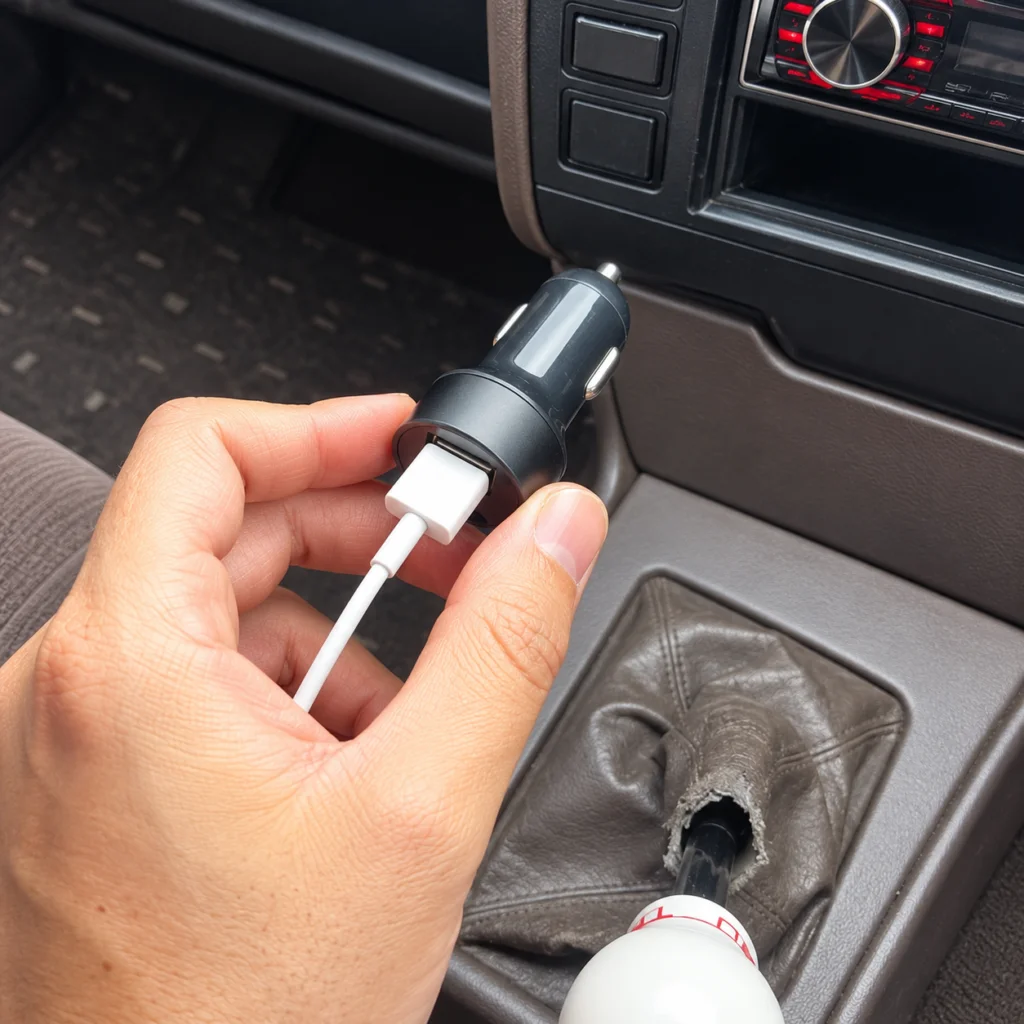
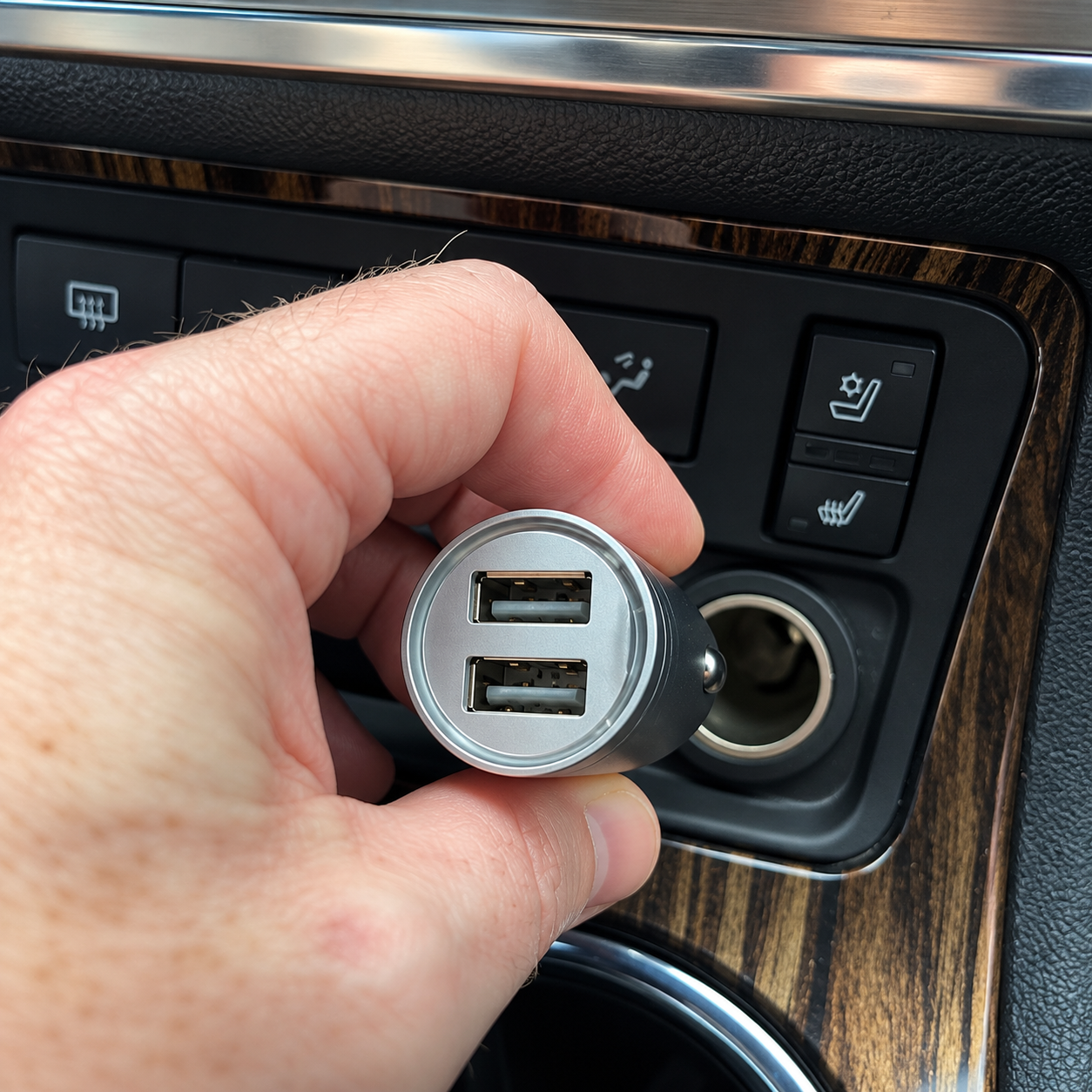
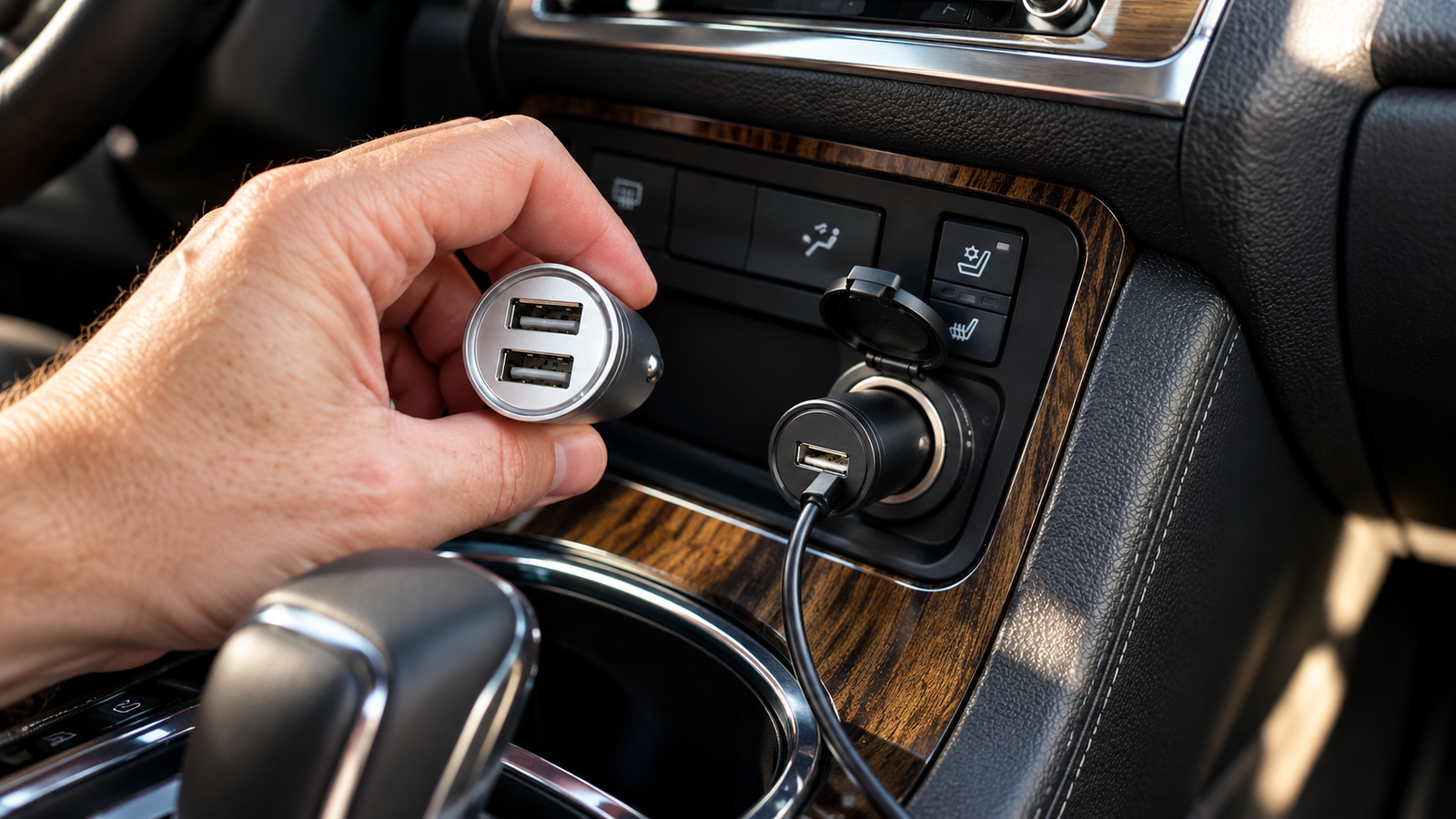
Causes 5–9: Your Charger
Cause 5
Cracked solder joint on the 12V pin. The most common internal failure in returned units. The solder connection between the center pin and the PCB cracks from repeated vibration and thermal cycling. If your charger works in one position but cuts out when you touch the barrel, the solder joint is the suspect.
Cause 6
Failed output IC. The charging controller IC manages the PD or QC handshake with your phone. When it fails, the charger may show a power light but never completes the protocol. Your phone sees it as an unknown device and draws only 5W, or nothing.
Cause 7
Thermal shutdown. A properly built charger shuts down when internal temperature exceeds roughly 75°C. If yours charges for a few minutes and then stops, unplug it and let it cool for five minutes. If it works again after cooling, the unit is running too hot for the load you are drawing from it.
Cause 8
Overstated wattage. A charger labeled 65W with a buck-only converter cannot generate 15V or 20V from a 12V input. Your phone requests 65W, the handshake fails, and the charge falls back to 5W. No per-port wattage breakdown on the spec sheet is the giveaway.
Cause 9
Port wear. USB-C and USB-A ports have a rated insert-cycle life. A worn port loses contact spring tension and charges intermittently. Slightly wiggling the cable while plugged in and getting a different result confirms port wear.
Causes 10–12: Your Cable
Cause 10
Internal wire break near the plug. Most cable failures happen within 5cm of the plug, at the bending point. The outer jacket looks fine. The conductor inside is severed. Bend the cable near each plug end while charging. If current flickers or starts when you bend it a certain way, you found the break.
Cause 11
Charge-only cable. Some USB-C cables carry power pins only and omit the data lines. These block the PD handshake on most phones and limit you to 5W. If your phone charges but not fast, try a cable explicitly rated for data transfer alongside power.
Cause 12
Missing E-marker chip. USB-C cables rated above 60W require an E-marker chip inside the connector housing. Without one, PD negotiation caps at 60W regardless of your charger's rated output. If you are trying to draw 90W or 100W and see a 60W cap, your cable is the bottleneck.
Causes 13–15: Your Phone
Cause 13
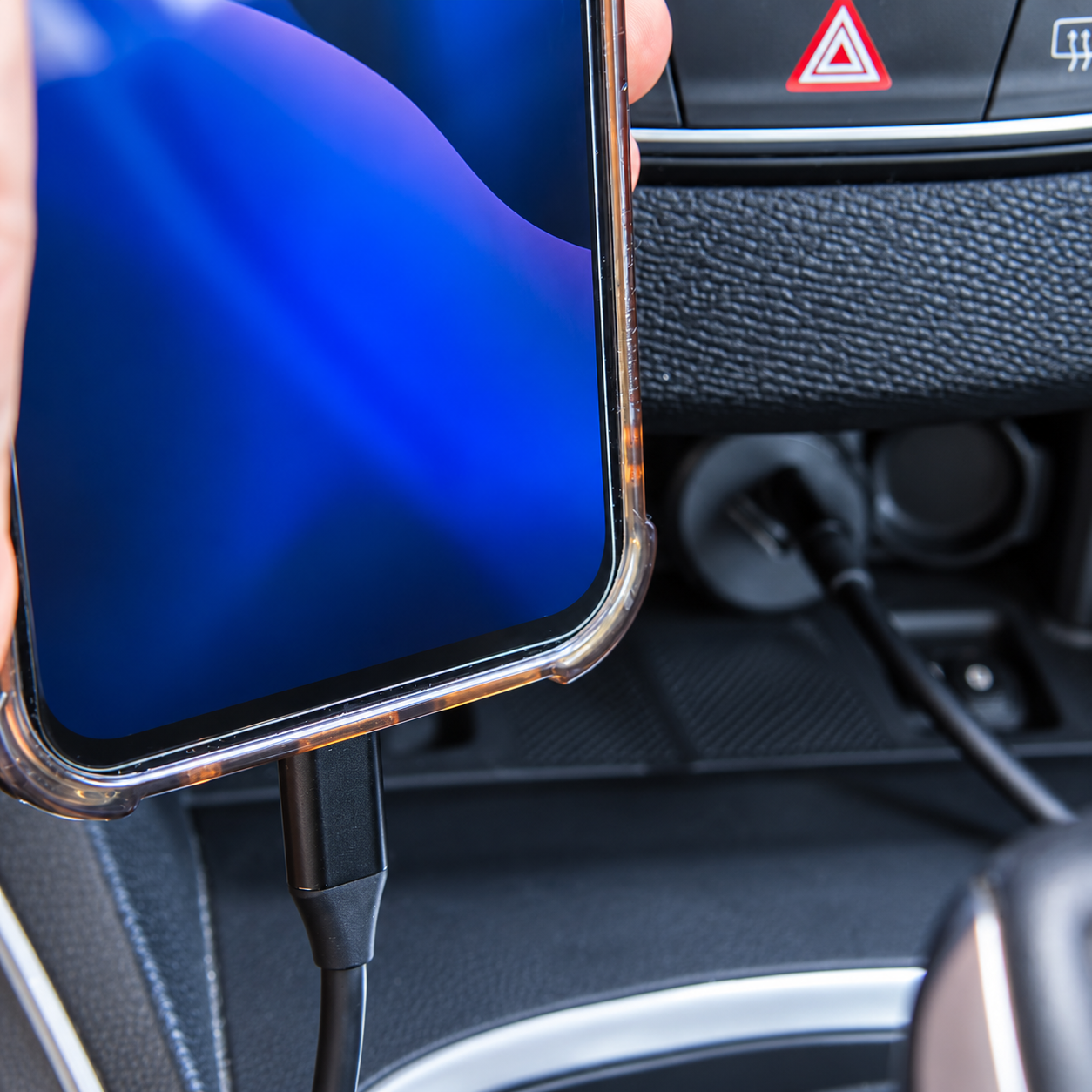
Dirty charging port. Lint packs into USB-C and Lightning ports over time and blocks pin contact. Clean your port with a dry wooden toothpick before blaming the charger or cable. Do not use metal tools or compressed air at high pressure.
Cause 14
Charging-pause algorithm. iOS and Android both throttle or pause charging in certain conditions. iPhone Optimized Battery Charging holds the battery at 80% when the phone predicts you will not need a full charge soon. Android adaptive charging may limit the overnight rate. These are intentional behaviors, not faults.
Cause 15
Battery-health throttle. A degraded cell causes your phone's charging circuit to reduce its input rate to protect the battery. If your phone charges noticeably slower than it did two years ago, check battery health in Settings on iPhone or through a battery app on Android. A result below 80% means the battery itself is limiting your charge speed.
When to Replace Your Charger and What to Buy
If your charger fails causes 5, 6, or 8, replace it. A cracked solder joint and a failed IC are not field-serviceable. A failed PD IC in continued use also risks delivering incorrect voltage to your phone's charging circuit.
When you pick a replacement, the spec sheet tells you more than the label does.
| Feature to verify | Why it matters |
|---|---|
| CE, FCC, and RoHS on the same unit | Independent safety tests, not a self-declared claim |
| Per-port wattage listed separately | Total output with no per-port breakdown is meaningless |
| OVP, OCP, and SCP listed | Guards against voltage spikes, overcurrent, and shorts |
| Buck-boost topology confirmed | Required to deliver 15V or 20V PD output from a 12V rail |
| Named IC manufacturer | Qualcomm, Cypress (Infineon), or TI (not "high-quality IC") |
The SUNDA car charger range covers 40W through 230W, with per-port PDO tables on file for every model. The 40W dual-port covers iPhone 15 fast charging at 20W. The 90W dual-port adds 45W PPS for Galaxy S24 Ultra alongside that same iPhone coverage. The 120W quad-port delivers Dual PD 60W per USB-C port for four-passenger vehicles. CE, FCC, and RoHS documentation ships with every unit. The car charger safety and certification guide covers which approvals each target market requires.
Source a Charger Your Customers Will Not Return
SUNDA has manufactured car chargers since 2009. Every model in the current line clears load-curve, thermal, ripple, and insert-cycle testing before it ships.
If you are sourcing for a fleet, a retail catalogue, or a private-label programme, contact the SUNDA sourcing team with your target wattage, port count, and annual volume. OEM branding and custom packaging are handled in-house.
FAQ
Why did my car charger suddenly stop working?
Most sudden failures trace to a blown socket fuse or a broken cable conductor near the plug. Neither shows external damage. Swap the cable first, then test your socket with a second device. If the socket is dead, pull the labeled fuse and check the element visually.
How do I know if my car's 12V socket fuse is blown?
Open your vehicle's fuse box and pull the fuse labeled ACC, CIG, or PWR. Standard blade fuses have a transparent window. A broken metal element inside confirms the fuse is blown. Replace it with the same amperage rating, typically 10A or 15A.
Can a car charger damage my phone?
A certified charger with OVP should not. An uncertified unit without it can push voltage spikes from the vehicle's 12V rail into your phone's charging circuit, especially during engine cranking. If your phone gets unusually hot while charging in the car, stop using that charger and ask for its certification documents.
Why does my car charger work but not charge my phone?
The charger is receiving power but the PD handshake is failing. Common causes are a charge-only cable with no data lines, a failed output IC, or a phone port blocked by lint. Swap the cable for one rated for data and power first.
How long should a car charger last?
A certified charger with quality components typically lasts three to five years under normal use. The main limiting factor is thermal stress. A charger running at peak load in a hot parked vehicle shortens component life considerably faster than one running at half load in a cooler environment.
What wattage car charger should I buy to avoid problems?
Buy slightly above your highest-draw device's peak. iPhone 15 fast charging needs 20W minimum. Galaxy S24 Ultra needs 45W PPS. A 90W charger at 45W load runs cooler and lasts longer than a 45W unit at its ceiling. The more headroom you give the charger, the lower the thermal stress on the IC.