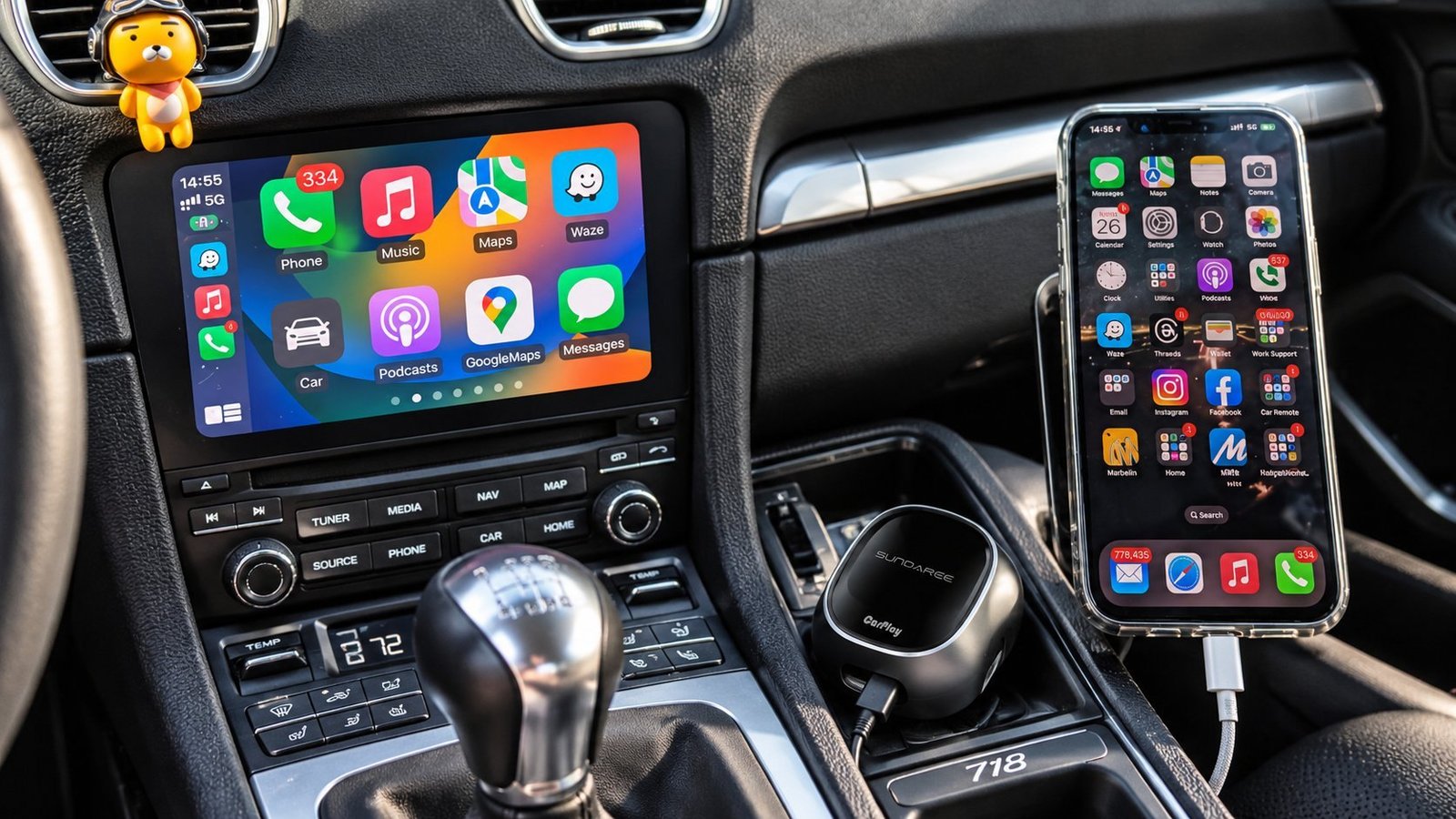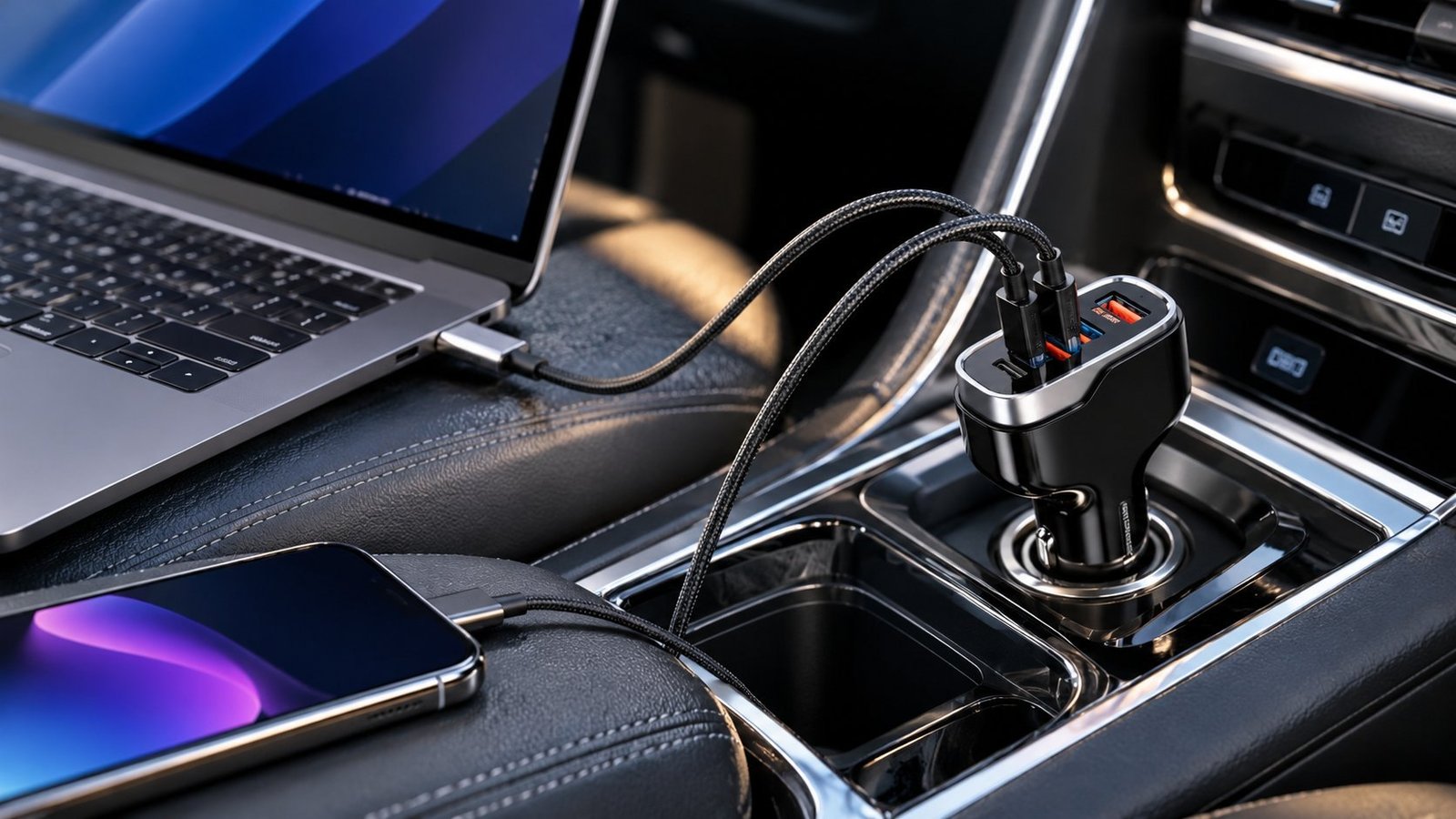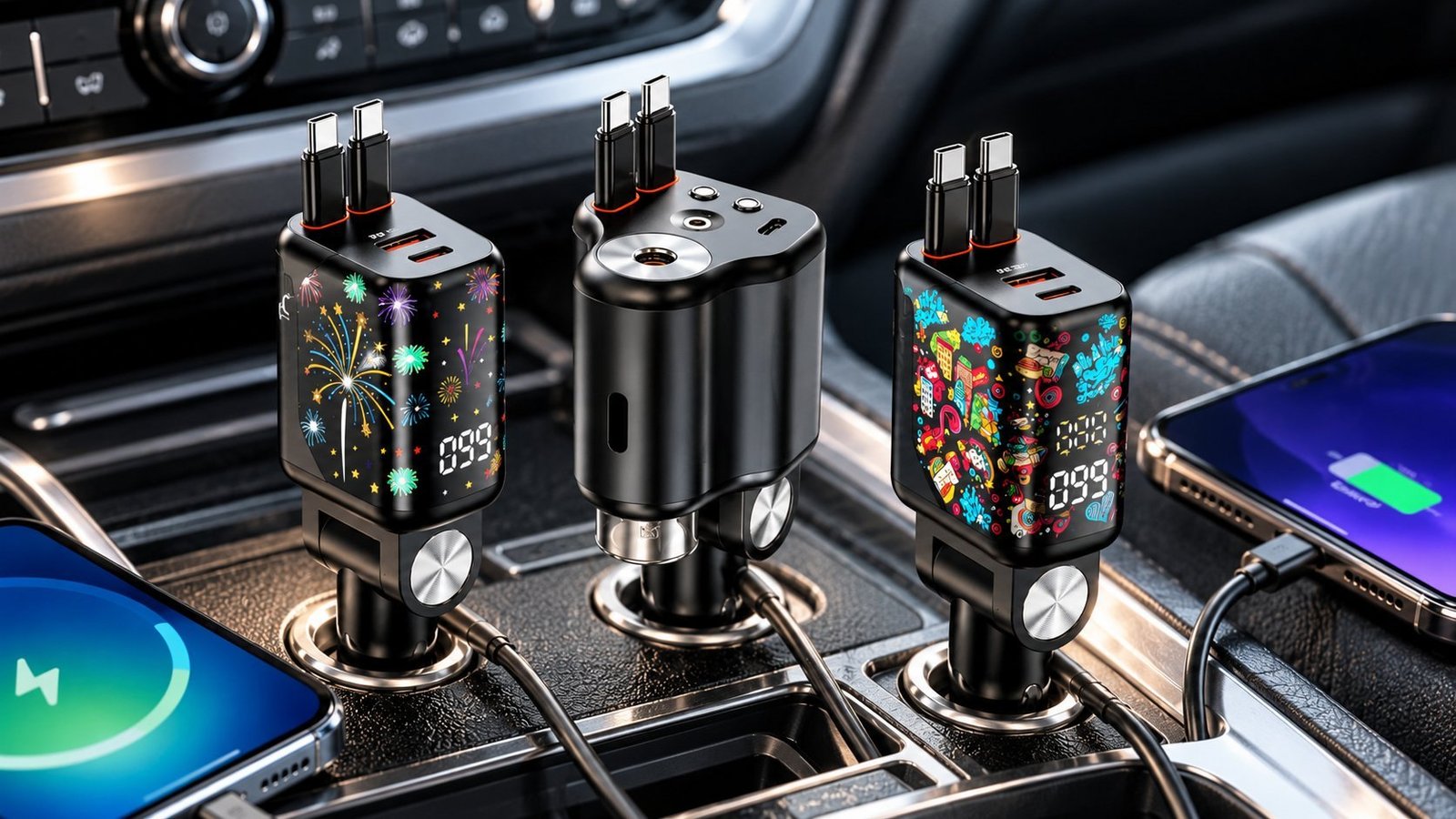
Yes, a quality USB car charger is safe to leave plugged in. A certified unit draws only a few milliamps at rest and will not meaningfully drain a healthy battery in 2026. The exceptions are cheap uncertified units with no proper standby mode, physically damaged chargers, and constant-power hardwired kits. If your charger carries a real certification mark and sits in a 12V socket that cuts off with the ignition, you can leave it in and forget about it.
What a Plugged-In Charger Actually Draws
A USB car charger left in the socket is not off. It sits in standby, running a small internal circuit that watches for a device to connect. That circuit, plus any status LED, is the entire parasitic load.
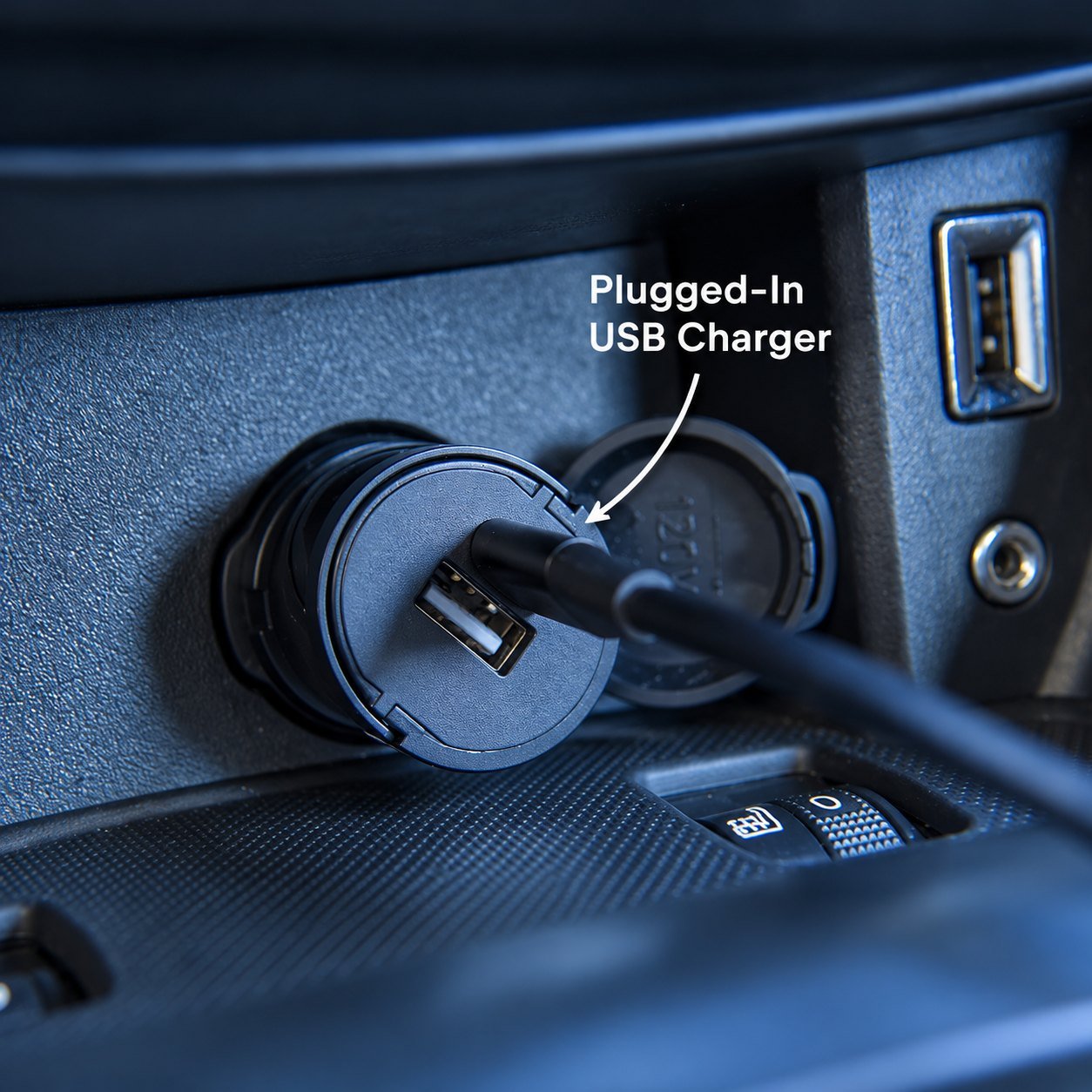
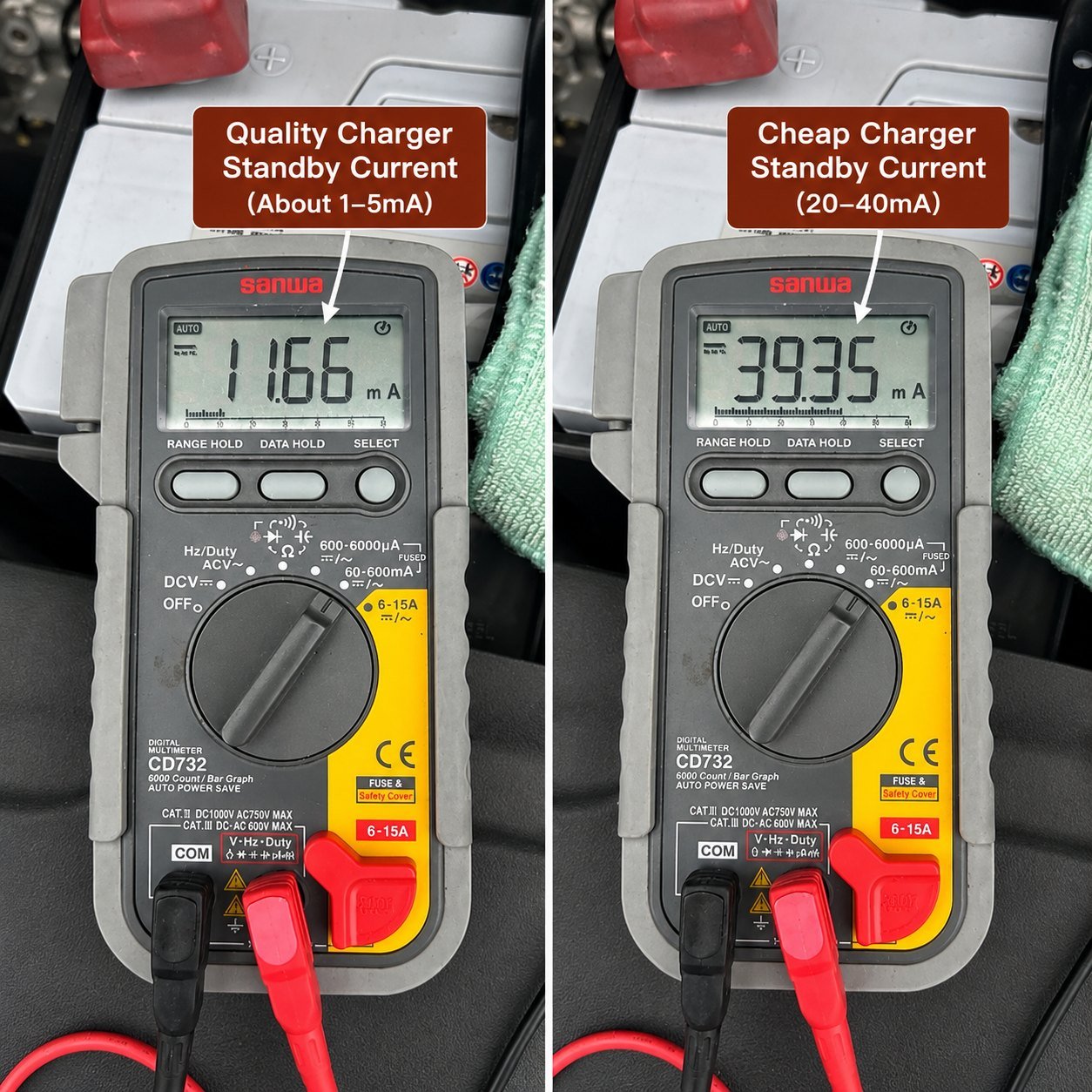
A well-designed unit draws 1mA to 5mA in standby. Put that against a typical 60Ah car battery and the math is reassuring. At 5mA, the charger pulls 0.12Ah per day. To drain even 10% of that battery takes roughly 50 days of continuous parking.
Here is the part most people miss. Your car itself draws more at rest than a good charger does. The clock, alarm, and sleeping ECU pull a combined 20mA to 50mA around the clock. A 2mA charger is a rounding error next to that. SUNDA measures standby current on every model in its car charger range at the factory bench, so the figure on the spec sheet is a real measurement.
| Charger type | Standby draw | Days to lose 10% of a 60Ah battery |
|---|---|---|
| Quality USB-C, no LED | ~1mA | ~250 days |
| Quality USB-C with status LED | 3 to 5mA | 50 to 80 days |
| Cheap no-name unit | 20 to 30mA | 8 to 12 days |
| Damaged or faulty unit | 50mA+ | under 5 days |
When It Becomes a Real Risk
The charger becomes a problem in a few specific situations. None of them apply to a good unit in normal use.
- Cheap uncertified units. A no-name charger with no proper standby circuit can idle at 20mA to 30mA. Over two weeks parked, that is enough to leave a marginal battery too flat to crank.
- A damaged charger. A unit that has been crushed, had liquid get into it, or run hot enough to swell its casing can develop an internal fault that draws far more than spec. Replace any charger that looks or smells wrong.
- Long parking plus a weak battery. A battery already near the end of its life has little reserve. Add two or more weeks of parking and even a small draw tips it over. The charger is rarely the real cause here. The tired battery is.
- Sub-zero weather. Cold cuts a battery’s available capacity. A draw that is harmless in summer has less margin to work against in a hard freeze. A full breakdown of parked-vehicle drain is worth reading if you store a car for long stretches.
Heat, Sunlight, and Long-Term Wear
The bigger long-term question is heat, not drain. A parked car cabin in direct sun can hit 70°C or more. That heat ages the electrolytic capacitors inside any charger over time, whether it is plugged in or not.

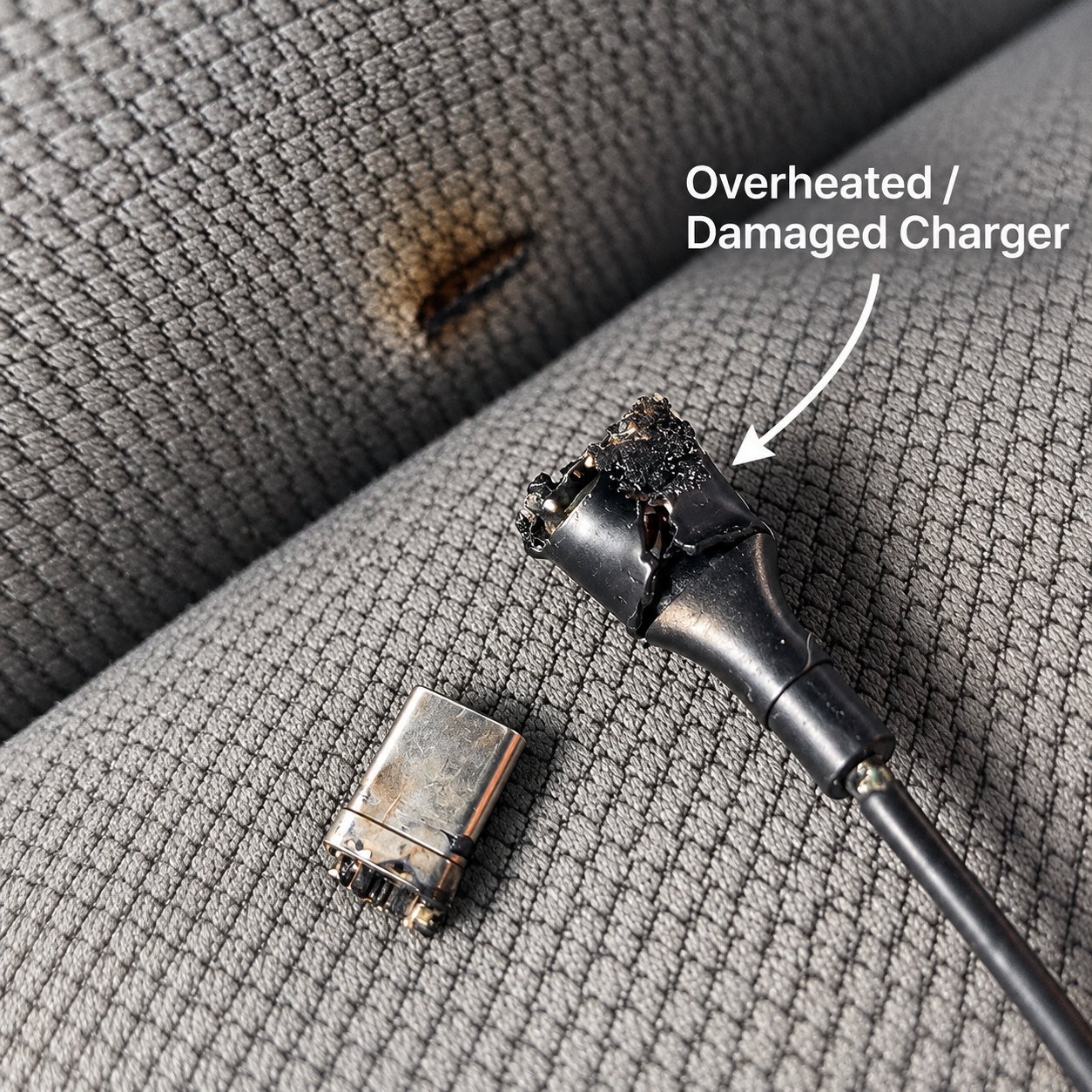
This is where build quality shows. A quality charger specs its components for a wide operating range, typically -30°C to +85°C, so cabin heat stays inside the safe envelope. A cheap unit built with capacitors rated to only 85°C with no margin degrades faster and can fail early. Leaving a good charger in a hot car is fine. Leaving a cheap one there for years is how you end up with a dead or unreliable unit.
What to Check Before You Leave It In
Run through this quick checklist. If a charger passes all five, leave it plugged in without a second thought.
- Certification marks. Look for real CE, FCC, or UL marks, not just printed claims.
- An accountable brand. A named manufacturer stands behind its protection circuits. A blank unbranded unit does not.
- A listed sleep current. A spec sheet that states standby draw tells you the maker actually measured it.
- Physical condition. No cracks, no swelling, no scorch marks, no loose socket fit.
- Socket behavior. Confirm whether your 12V socket stays live with the key out. If it does and you park for weeks, unplug.
Why Sleep Current Is a Selling Point for Resellers
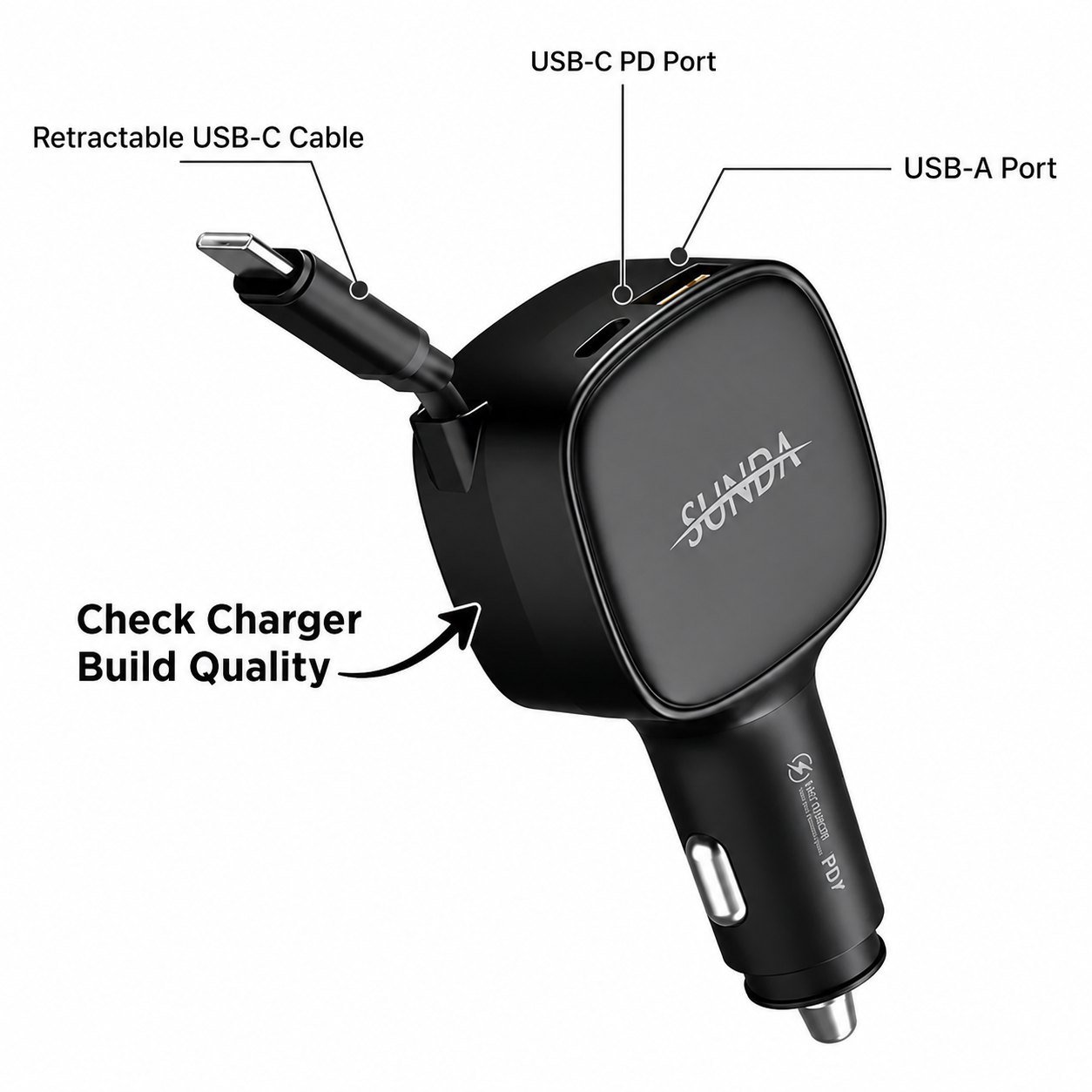
For distributors and private-label brands, a low standby current is a spec worth printing on the listing. Buyers searching whether they can leave a charger plugged in are a real, steady segment, and a stated sub-5mA figure answers their anxiety directly.
That one number converts browsers into buyers on a product page. The CC53 car charger series is measured and documented for standby draw across the full production run, so you can list the figure with confidence. The same low-standby design runs across the wall charger range for sellers who bundle home and car units. CE, FCC, RoHS, and E-Mark are standard.
Request measured standby data and a quote for your target market and the SUNDA team will respond within two business days. OEM and ODM programs run from 500 units per SKU.
Summary
Leave a quality USB car charger plugged in. A certified unit drawing a few milliamps is safe, and your car’s own electronics pull more than it does. Watch out for cheap uncertified units, damaged chargers, long parking on a weak battery, and the slow wear that cabin heat causes over years. Check for real certification marks and a stated sleep current, and the question answers itself.
Source Low-Standby USB Car Chargers
Ask for measured standby data on any model, plus a quote for your target market. OEM and ODM programs run from 500 units per SKU.
FAQ
Can a USB car charger drain my battery overnight?
No, not a quality one. A certified charger drawing 1mA to 5mA pulls a tiny fraction of your battery over a single night. You would need roughly 50 days of continuous parking for a 5mA draw to cost even 10% of a healthy 60Ah battery. Overnight is nowhere near enough to matter.
How many milliamps does a plugged-in car charger use?
A well-designed USB car charger draws 1mA to 5mA in standby, depending on whether it has a status LED. Cheap uncertified units can idle at 20mA to 30mA. For reference, your car’s own clock, alarm, and sleeping ECU draw a combined 20mA to 50mA at rest, more than a good charger.
Is it safe to leave a charger plugged in during winter?
Generally yes, but cold reduces a battery’s available capacity, so the safety margin shrinks. A quality low-draw charger is still fine on a healthy battery. If your battery is old or you park for more than two weeks in hard frost, unplug the charger as a precaution.
Should I unplug my charger every time I park?
Not for daily parking. A quality charger in an ignition-switched socket cuts off with the key anyway. Unplug only if your socket stays live with the key out and you are parking for weeks, or if your battery is weak. For normal daily use, leaving it in is fine.
Are chargers with always-on LEDs a problem?
Not on a quality unit. A status LED adds a few milliamps to standby draw, taking a typical charger from around 1mA to 3 to 5mA. That is still trivial against a healthy battery. On a cheap charger, an always-on LED paired with a poor standby circuit is a sign of a higher overall draw.
What standby current do SUNDA chargers spec?
SUNDA car chargers are measured for standby current on the factory bench, with quality models drawing under 5mA at rest. The figure is documented per model across the production run, so resellers can list a real, verified standby spec rather than a vague claim. Request the measured data for a specific model from the team.